
+34 624 00 21 27 of the centre

Complicated Duel: What It Is, Why It Persists, and How EMDR Treats It from the PAI Model

A Complicated Duel: When the PAI System Doesn't Process Loss and How EMDR Can Help

What is complicated grief and why doesn't it disappear with time?

Grief is a natural and universal response to the loss of a loved one. It is the process by which a human being assimilates the absence, reorganises their emotional world, and gradually finds a new way of relating to the memory of the person who is no longer there. However, not all grief evolves adaptively. When the brain's Adaptive Information Processing (AIP) system cannot integrate the experience of loss, pain becomes stagnant, and what mental health professionals call complicated grief or prolonged grief appears.

Complicated grief is not a manifestation of emotional weakness nor a voluntary stance of clinging to suffering. From the perspective of the PAI Model, developed by Francine Shapiro as the theoretical basis for EMDR (Eye Movement Desensitization and Reprocessing) therapy, grief that does not resolve is due to a neurobiological block in the processing of information associated with the loss. The memory of the deceased person, along with the intense emotions, bodily sensations, and cognitions that accompanied it, becomes stored dysfunctionally and in isolation within neuronal networks, unable to connect with other more adaptive information networks that the individual already possesses.

This phenomenon explains why some people continue to experience searing pain years after the death of a loved one, as if the loss had only happened yesterday. Information related to grief remains «frozen» in time, retaining all its original emotional intensity and preventing the brain from carrying out the adaptive integration necessary for psychological well-being.
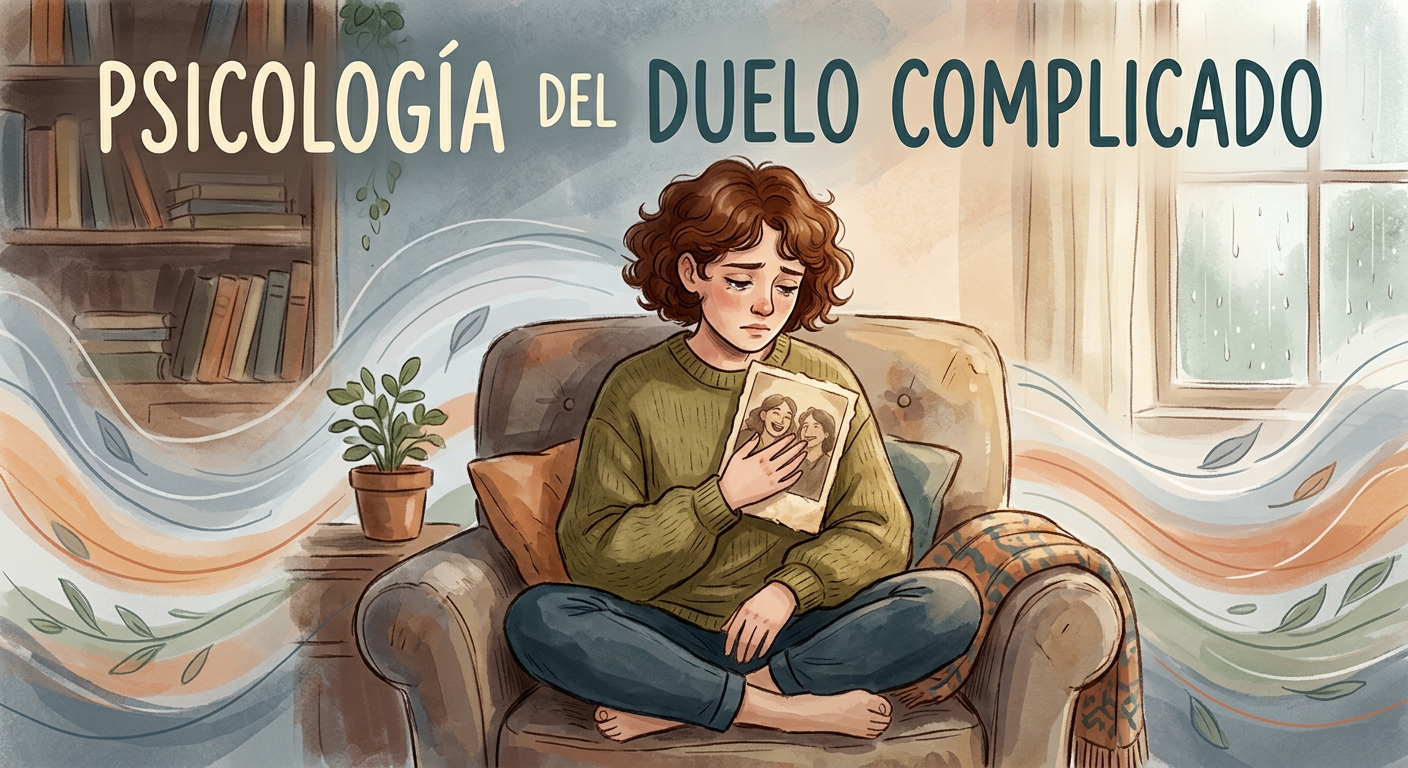
 

Difficult duel treatment in Fuengirola and Mijas

Warning signs: how to distinguish normal grief from complicated grief

There isn't a rigid timeline that separates normal grief from complicated grief. Western culture has imposed phrases such as «you should be over it by now» or «time heals all wounds,» but neuroscience shows that time alone doesn't process traumatic or unintegrated information. The key to identifying complicated grief isn't its duration, but rather the operational quality and the evolution of pain.

Clinical manifestations of complicated grief according to the PAI model

The Adaptive Information Processing system stores experiences in neural networks that contain multiple interconnected components. When grief becomes «frozen,» these components remain active and generate symptoms that affect various areas of a person's life:
Neural network component Complicated grief manifestation
Mental images Vivid flashbacks of death, of the body, or of the moment of farewell; intrusive images that appear without warning
Emotions Intense and unchanging pain, guilt, rage, anxiety, emotional numbness, or extreme alternation between emotional states
Bodily sensations Chest tightness, lump in the throat, chronic fatigue, sleep disturbances, changes in appetite
Cognitions «I can't live without that person», «If only I'd done something different...», «I'll never be happy again», extreme idealisation of the deceased
Behaviours Avoiding places, objects or people associated with the memory; difficulty reorganising life without the person; social isolation

Key differential criteria

Complicated grief is distinguished from normal grief by several fundamental indicators:
  • Unchanging intensityThe pain does not diminish in intensity with the passage of time; it remains as sharp as in the first few weeks.
  • Extreme idealisationThe deceased is remembered as perfect, without flaws, which makes a realistic acceptance of the loss difficult.
  • Blame cultureThe person attributes excessive responsibility to themselves for a death or for not having done «enough».»
  • Total avoidanceNot only is grief painful, but any contact with memories is avoided, which prevents processing.
  • Functional deteriorationInability to maintain current relationships, work, care for oneself, or find meaning in life.
  • Altered identityThe person no longer knows who they are without the presence of their loved one; their self-image becomes fragmented.
You might be interested in reading: What is the PAI MODEL

How EMDR can help with complicated grief

 The PAI Model applied to grief: why the brain cannot «digest» loss

The neural network of the affective bond

From the perspective of PAI Model, the emotional bond with a loved one is not an abstract entity. It is a complex neural network which has been built up over years or decades of interactions, shared experiences, emotions, learnings and meanings. This network contains:
  • Episodic memoriesspecific moments shared together
  • Semantic memorieswhat we know about that person, their personality, their tastes
  • Procedural memorieshow we related to each other, shared rituals, interaction dynamics
  • Internal representations: how that person existed in our internal world, what function they served in our emotional regulation
When that person dies, the brain must update an immense amount of information. The neural networks that contained expectations of encounters, of communication, of presence, must be reorganised. This is a natural process that the PAI system is designed to perform.

When the processing system freezes

However, in certain circumstances, this processing cannot be completed. The PAI Model Here are several factors that can block the adaptive integration of grief: * **Unresolved Trauma:** Previous unresolved traumatic experiences can complicate the current grieving process, making it harder to move forward. * **Sudden or Unexpected Loss:** The abrupt nature of some deaths can leave individuals feeling shocked, disoriented, and unable to process the loss effectively. * **Lack of Social Support:** Inadequate or unsupportive social networks can leave the bereaved feeling isolated and overwhelmed, hindering their ability to cope. * **Ambiguous Loss:** Losses where there is no clear end or solution, such as a loved one with dementia or someone who is missing, can make grieving particularly difficult. * **Guilt or Regret:** Feelings of guilt, regret, or self-blame related to the deceased can significantly impede the natural course of grief. * **Complicated Bereavement (also known as Prolonged Grief Disorder):** This is a condition where intense grief persists for an unusually long time and interferes with daily life. * **Pre-existing Mental Health Conditions:** Conditions like depression, anxiety, or post-traumatic stress disorder (PTSD) can be exacerbated by grief and make adaptive integration more challenging. * **Cultural or Societal Norms:** Certain cultural or societal expectations about how grief should be expressed (or not expressed) can put pressure on individuals and prevent them from grieving in a way that feels authentic to them. * **Difficulty Expressing Emotions:** Individuals who struggle to identify, understand, or express their emotions may find it harder to process their grief. * **Multiple Losses:** Experiencing several significant losses in a short period can overwhelm an individual's capacity to grieve and integrate each loss. * **Fear of Forgetting:** Some individuals may consciously or unconsciously resist moving through grief for fear of forgetting their loved one. * **Stigma Around Grief:** The perception that grief is a weakness or something to be "overcome" quickly can lead individuals to suppress their feelings.
Factors related to death:
  • Sudden unexpected death
  • Violent death, accident or suicide
  • Death under circumstances that cause guilt or shame
  • Lack of emotional farewell or closure
  • Death of a child (inversion of the expected life order)
Relationship factors
  • Extreme emotional dependency
  • Unresolved conflicts with the deceased
  • Ambivalent relationship (simultaneous love and anger)
  • Identity strongly merged with the lost person
Personal and contextual factors
  • Previous history of unprocessed trauma or losses
  • Lack of a social support network
  • Economic or practical difficulties that prevent grieving
  • Cultural or religious beliefs that block the expression of pain
  • Comorbidity with depression, anxiety, or post-traumatic stress disorder
When these factors are present, information related to loss is dysfunctionally stored, isolated from memory networks containing resources, adaptive perspectives, and prior learning about resilience and recovery.
You might be interested in reading: What is EMDR really?
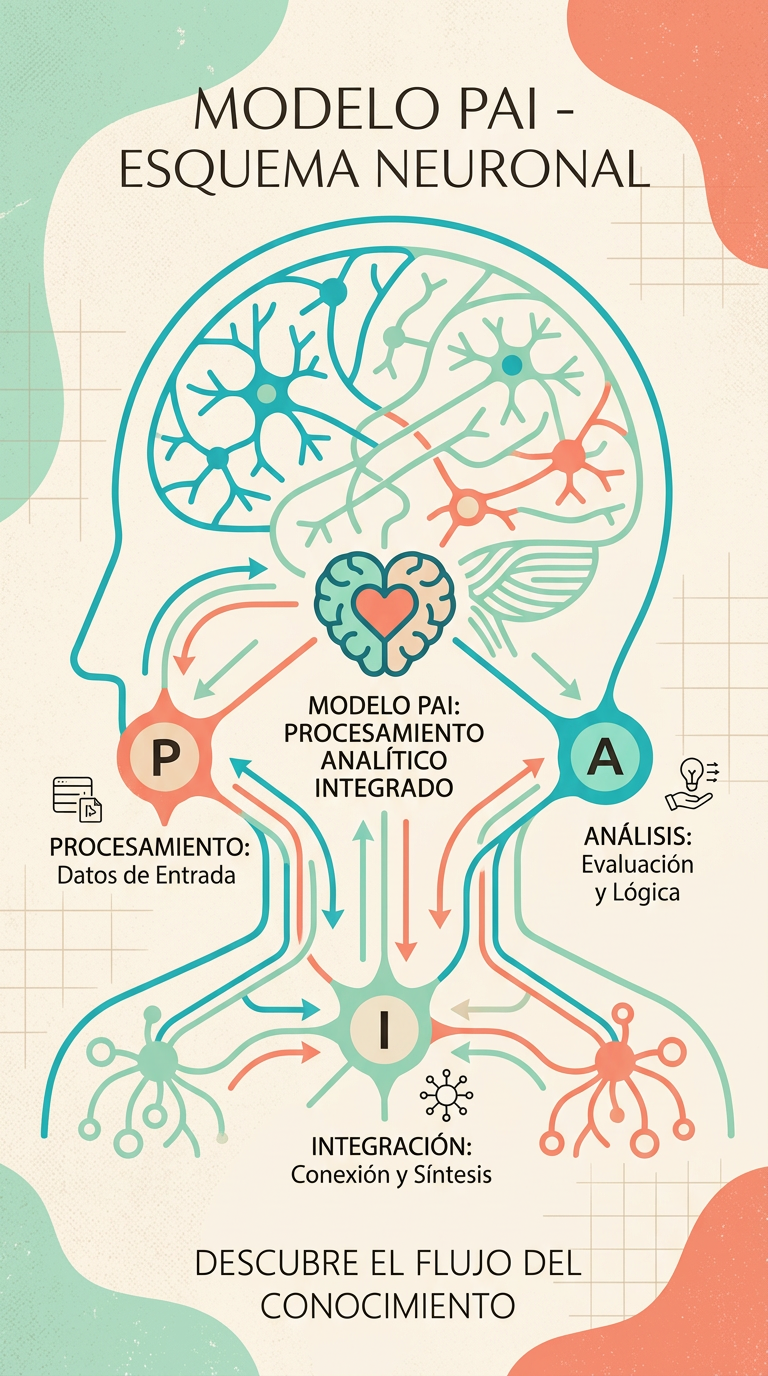
PAI model when the brain needs help to overcome grief

How EMDR treats complicated grief from the PAI Model

The therapeutic principle: reactivate natural processing

The EMDR It is not a therapy for «forgetting» a loved one. Its aim is not to eliminate the memory or the pain associated with loss. From the PAI Model, EMDR aims to Reactivate the adaptive information processing system which was interrupted at the time, allowing the brain to integrate the experience of death in a healthy way.
EMDR therapy for complicated grief works directly with the neural networks where is the loss information stored. By means of bilateral stimulation —guided eye movements, alternating tactile stimulation or auditory stimuli— it is easier for the dysfunctional neural network to access other, more adaptive information networks that the patient already possesses.
Recommended reading The process of grieving.

The reprocessing process in grief

During an EMDR session applied to complicated grief, the following reprocessing phases may be observed:
1. Access to the grief neural network The therapist helps the patient identify the initial target: a representative image of the loss, an associated negative cognition («I'll never be okay again»), the predominant emotion, and the corresponding bodily sensation. This activates the specific neural network containing the «frozen» information.
2. Bilateral stimulation and unlocking Bilateral stimulation makes it easier for the grief neural network to start connecting with other networks. New associations, memories, emotions, and perspectives that were previously inaccessible because the network was isolated can emerge.
3. Adaptive Integration As reprocessing advances, information starts to integrate. The person might:
  • Access positive memories of the relationship that balance the pain
  • Develop more adaptive cognitions («I can honour their memory and continue living»)
  • To reduce the negative emotional burden associated with death
  • Experiencing a sense of closure or peace that previously wasn't possible
4. Installation and decommissioning The therapist works to strengthen adaptive cognitions and ensure the patient returns to a state of emotional equilibrium by the end of each session. Grief does not disappear, but it transforms: it ceases to be a lacerating and immutable pain and becomes a painful but integrable memory.

 What changes and what remains

It is fundamental to understand that EMDR does not seek to eliminate the bond with the deceased person. The therapeutic aim is that:
Before EMDR After EMDR
The memory triggers intense, uncontrollable pain. The memory can be evoked with sadness, but without the overwhelming burden
The person is trapped in the moment of death The person can access the entire history of the relationship, including the positive moments.
Feelings of guilt, worthlessness or hopelessness Adaptive cognitions about one's own ability to survive and find meaning
Bodily sensations of tightness, emptiness, or anguish Reduction of extreme physiological activation
Total avoidance or obsession with remembrance Capacity for flexible memory, without avoidance or obsession
Recommended reading EMDR: myths and realities

EMDR Therapy at Calma Psicólogos in Fuengirola

Scientific evidence of EMDR for complicated grief

Studies and systematic reviews

The effectiveness of EMDR in treating complicated grief has been documented in multiple studies:
  • Sprang (2001)It demonstrated that EMDR produced significant reductions in symptoms of trauma and complicated grief compared to waiting lists.
  • Böhm & Völler (2010)Review that highlighted the effectiveness of EMDR for traumatic grief, especially when co-occurring with PTSD.
  • Cvetek (2008)Study that showed significant improvements in patients with complicated grief following EMDR treatment, with maintenance of results at follow-up.
  • Morris & Morris (2012)Review of cases that illustrated the application of the PAI Model to grief, emphasising the importance of reprocessing memory networks.

Institutional recognition

Complicated grief has gained recognition as a relevant clinical condition:
  • The OMS include prolonged grief disorder in ICD-11 (International Classification of Diseases, 11th Revision)
  • The APA Have you considered the inclusion of «Prolonged Grief Disorder» in future editions of the DSM
  • EMDR Europe y EMDR International Association han desarrollado protocolos específicos para el tratamiento del duelo
Related article on expansion: A detailed history of EMDR

Benefits of EMDR therapy

EMDR Protocol for Grief: Phases and Special Considerations

Stages of treatment

Treatment for complicated grief using EMDR follows the standard eight phases of the protocol, with specific adaptations:
Phase 1: History and Treatment Planning Detailed assessment of the loss history, the nature of the relationship with the deceased, personal resources, and support networks. Identification of potential multiple targets (the death itself, unresolved prior moments, aspects of the relationship).
Phase 2: Preparation Explanation of the PAI Model applied to grief. Preparation for the possibility of intense emotions arising during reprocessing. Development of stabilisation techniques (container, safe place) to manage activation between sessions.
Phase 3: Evaluation Initial Target Identification: Negative Image, Negative Cognition, Desired Positive Cognition, Emotion, Subjective Unit of Distress (SUD 0-10), and Bodily Sensation.
Phase 4: Desensitisation Application of bilateral stimulation while the patient maintains focus on the target. Allowing natural associations to emerge. The therapist intervenes minimally, facilitating processing.
Phase 5: Installation Strengthening desired positive cognition through bilateral stimulation, linking it with the neural network of memory.
Stage 6: Body Body scan to identify and process any residual feelings of tension or discomfort.
Stage 7: Close Ensure the patient returns to a state of equilibrium. Reinforce stabilisation techniques. Planning for the time between sessions.
Phase 8: Re-evaluation At the start of each subsequent session, review progress, re-evaluate previous targets and plan new objectives if necessary.

Special considerations in bereavement

  • Treatment rhythmGrief requires a respectful pace; reprocessing is not forced
  • Significant daysAnniversaries, birthdays, special dates can reactivate symptoms; their management is planned
  • Support figuresWhen appropriate, the inclusion of family members in understanding the process is considered.
  • Existential meaningEMDR can facilitate not only symptom reduction but also the search for new meaning after loss.

Grief therapy in Fuengirola

Cases in which EMDR for grief is particularly indicated

EMDR based on the PAI Model is particularly beneficial in situations of complex grief:
  • The loss of a childThe disruption of the expected vital order creates a trauma that frequently remains «frozen».» 
  • SuicideThe burden of guilt, shame, and unanswered questions blocks natural processing
  • Sudden deathThe absence of a farewell prevents emotional closure.
  • Death in traumatic circumstancesAccidents, violence, natural disasters
  • Accumulated multiple lossesWhen a loss activates previous, unaddressed grief networks
  • Childhood trauma duelEarly losses that shaped the development of the AI system
  • Duel with comorbidityWhen complicated grief coexists with depression, anxiety, or PTSD

Recommended reading PTSD

Grief therapy in Fuengirola

Frequently Asked Questions about EMDR for Complicated Grief

Will EMDR make me forget the person I lost?

No. The goal of EMDR is not forgetting, but rather Adaptive integration. The deceased person will continue to be important in their life, but the memory will no longer trigger overwhelming and uncontrollable pain. They will be able to remember them with sadness, but also with love, gratitude, and peace.

How long does the treatment last?

It depends on the complexity of the case. For complicated grief without extensive prior trauma, between 6 and 12 sessions. In cases of cumulative complex trauma, treatment may extend for a longer period, requiring a preliminary preparation and stabilisation phase.

Is it necessary to talk about death in detail?

It is not essential. EMDR works with the neural networks the information is stored, does not depend exclusively on extensive verbal narrative. This is especially useful when the memory is too painful to verbalise or when there are gaps in memory.

Is it possible for me to do EMDR if many years have passed since the loss?

Yes. The PAI Model explains that «frozen» information can remain unprocessed for decades. EMDR can be effective regardless of the time elapsed, as long as there is a dysfunctional neural network to reprocess.

Recommended reading EMDR Find out more
EMDR therapist in Mijas psychological therapy

When to seek professional help for complicated grief

It is recommended to consult with an EMDR specialist when:
  • It has been over 6-12 months and the pain is still as intense as when it first started.
  • The loss is severely impacting daily functioning (work, relationships, self-care).
  • Experiencing trauma symptoms (flashbacks, nightmares, hypervigilance)
  • Do you feel you can't talk about the deceased person, or conversely, can you only think about them
  • Do you have thoughts of excessive guilt or self-harm?
  • Have you developed symptoms of depression or anxiety that are not improving?

Recommended reading 7 types of Anxiety.

At CALMA Psychologists, we support therapeutic processes related to complicated grief with a personal, professional, and evidence-based approach.

Following an initial session, we can assess whether to begin EMDR therapy in Fuengirola – Mijas, to help you understand if this approach is suitable for you and to support you throughout the grieving process.

Mother hugging father in perinatal grief after the loss of their baby in Fuengirola

Post written by Samara Valenzuela

If after reading this entry you think you might need to attend to assess whether you require EMDR therapy and would like to know more about the professionals who provide it at CALMA PSICOLOGOS, please do not hesitate to CLICK.

References and Bibliography

Reference books and chapters

  • Shapiro, F. (2001). Eye Movement Desensitisation and Reprocessing: Basic Principles, Protocols, and Procedures (2nd ed.). Guilford Press.
  • Shapiro, F. (2018). Eye Movement Desensitisation and Reprocessing (EMDR) Therapy: Basic Principles, Protocols, and Procedures (3rd ed.). Guilford Press.
  • Shapiro, F. (2012). Getting Past Your Past: Take Control of Your Life with Self-Help Techniques from EMDR Therapy. Rodale Books.
  • Solomon, R. M., & Rando, T. A. (2007). EMDR and grief: Treatment guidelines for the EMDR therapist. In F. Shapiro, F. W. Kaslow, & L. Maxfield (Eds.), Handbook of EMDR and Family Therapy Processes (pp. 289-306). Wiley.
  • Rando, T. A. (1993). Treatment of Complicated Grief. Research Press.

Scientific articles

  • Sprang, G. (2001). The use of eye movement desensitisation and reprocessing (EMDR) in the treatment of traumatic stress and complicated mourning: Psychological and behavioural outcomes. Research into Social Work Practice, 11(3), 300-320.
  • Böhm, K., & Völler, H. (2010). EMDR in complicated grief reactions. Journal of Psychotraumatology and Psychosomatic Medicine, 8(1), 25-34.
  • Cvetek, R. (2008). EMDR treatment of panic disorder with agoraphobia and complicated grief. Journal of EMDR Practice and Research, 2(2), 125-134.
  • Morris, S., & Morris, T. (2012). EMDR for grief: Proposed mechanisms of action. Journal of EMDR Practice and Research, 6(4), 175-183.
  • EMDR nella cura del lutto e del dolore. Journal of EMDR Practice and Research, 1(2), 113-130.
  • Zangwill, W. M. (2020). EMDR therapy for grief and mourning: Theories and applications. Journal of EMDR Practice and Research, 14(3), 195-208.
  • Boelen, P. A., & Prigerson, H. G. (2007). The influence of symptoms of prolonged grief disorder, depression, and anxiety on quality of life among bereaved adults. European Archives of Psychiatry and Clinical Neuroscience, 257(8), 444-452.

Clinical guidelines and consensus statements

  • World Health Organization (WHO). (2013). Guidelines for the Management of Conditions Specifically Related to Stress. WHO Press.
  • American Psychiatric Association (APA). (2017). Clinical Practice Guideline for the Treatment of PTSD. American Psychiatric Association Publishing.
  • Prigerson, H. G., Horowitz, M. J., Jacobs, S. C., Parkes, C. M., Aslan, M., Goodkin, K., … & Maciejewski, P. K. (2009). Prolonged grief disorder: Psychometric validation of criteria proposed for DSM-V and ICD-11. PLoS Medicine, 6(8), e1000121.
  • EMDR Association Spain. (2020). EMDR protocol for complicated grief. Technical document.

Quick reading to expand information on EMDR and/or related topics: