
Couples therapy in Fuengirola from the perspective of social constructionism: a different way of understanding relationships
The Couple therapy from a social constructionist perspective It proposes a different way of approaching the conflicts and difficulties that arise in a relationship. Instead of focusing solely on who is right or who needs to change, this approach centres on dialogue, mutual understanding and the joint construction of new ways of relating.
At CALMA Psicólogos, we work from a perspective based on respect, deep listening, and trust in each person's own resources. We understand that every couple has a unique story, and that the most valuable solutions often emerge when both partners can express their needs, emotions, and expectations in a safe space.
You might be interested in reading: When to go to couples therapy
What Is social constructionism applied to couples therapy?
Social constructionism starts from a fundamental idea: our reality is constructed through conversations, relationships, and the meanings we give to our experiences.
From this perspective, relationship problems are not understood as individual defects, but as relational patterns that have developed over time and can be transformed through new forms of communication.
Therapy thus becomes a space where the couple can reflect, explore different perspectives, and together build new ways of facing relationship challenges.
Recommended reading 8 types of couples therapy
The importance of dialogue in couples therapy
In this approach, dialogue takes centre stage.
Many relationship crises persist because there are needs, expectations, or emotions that have never been clearly expressed. Frequently, people expect their partner to guess what they are feeling or needing, leading to frustration and resentment when this doesn't happen.
The reality is that:
- No one can read another person's mind.
- Love doesn't guarantee automatic understanding.
- Needs change over time.
- Communication requires constant updating.
Therefore, therapy helps to create more honest, profound, and respectful conversations.
Recommended reading Couples therapy: when it works and when it's a waste of money

How does couple therapy work from this perspective
Relational therapy is based on questions that encourage reflection and mutual understanding.
The aim is not to get information quickly or to look for culprits, but to help each partner express their experience and feel heard.
Some frequently asked questions are:
- What is the most important thing we should know about you?
- What do you hope to achieve with this process?
- What would you like to be different in your relationship?
- A fulfilling relationship, to me, is one where there's mutual respect and understanding. It's about having a partner you can truly be yourself with, someone who supports your goals and dreams, and who you can rely on through thick and thin. Communication is key – being able to talk openly and honestly about your feelings, and also being a good listener. It's about shared experiences, laughter, and a deep sense of companionship. Ultimately, it's a partnership where both individuals feel seen, valued, and loved.
These conversations allow for the discovery of aspects that often remained hidden behind repetitive discussions or seemingly irresolvable conflicts.
Recommended reading Hmm?An ante-room to divorce or renewed love?
How does couple therapy work from this perspective
Relational therapy is based on questions that encourage reflection and mutual understanding.
Recommended reading Cómo saber si la terapia de pareja está funcionando
The aim is not to get information quickly or to look for culprits, but to help each partner express their experience and feel heard.
Some frequently asked questions are:
- What is the most important thing we should know about you?
- What do you hope to achieve with this process?
- What would you like to be different in your relationship?
- A fulfilling relationship, to me, is one where there's mutual respect and understanding. It's about having a partner you can truly be yourself with, someone who supports your goals and dreams, and who you can rely on through thick and thin. Communication is key – being able to talk openly and honestly about your feelings, and also being a good listener. It's about shared experiences, laughter, and a deep sense of companionship. Ultimately, it's a partnership where both individuals feel seen, valued, and loved.
These conversations allow for the discovery of aspects that often remained hidden behind repetitive discussions or seemingly irresolvable conflicts.
Recommended reading 12 tips for better managing couple arguments

Create a safe space for both people
One of the fundamental objectives is that each member of the couple can speak without interruptions, criticism, or judgment.
When people feel safe to express what they truly think and feel, new possibilities for understanding and change emerge.
The therapy seeks to foster:
- Active listening.
- Emotional validation.
- Mutual respect.
- Curiosity to understand others.
- The construction of agreements.
Recommended reading Stop getting caught up in arguments
The role of one-to-one sessions
In many couples therapy processes, it is useful to supplement joint sessions with individual meetings.
These sessions allow for the exploration of personal aspects that may be difficult to discuss in front of one's partner and help to better understand the dynamics influencing the relationship.
Subsequently, this information is integrated into collective work to foster deeper and more lasting changes.

The five topics that cause the most conflict in couples
Throughout clinical experience, there are certain areas that tend to appear frequently in couple's crises.
Sexuality
Intimacy is one of the fundamental pillars of many relationships.
In therapy, aspects such as: are explored
- Sexual satisfaction.
- Communicating about wants and needs.
- The emotional connection.
- Trust.
- The consequences of potential infidelities.
Talking openly about sexuality often reduces tension and strengthens emotional connection.
Highly recommended reading: 12 tips for managing couple arguments
Money
Financial management is one of the most frequent causes of conflict.
Some important issues are:
- How are revenues managed?.
- Who makes the economic decisions.
- How are the expenses shared?.
- Financial fairness perception.
- Agreements on savings and joint projects.
A sense of fairness is often a key factor in relationship stability.
3. The family of origin
Family of origin continues to influence a couple's life together, even many years after they've started a relationship.
In therapy, we explore issues such as:
- Boundaries with family.
- The degree of autonomy of the couple.
- External interference management.
- Family feuds.
Building your own identity as a couple helps to reduce tension and strengthen the bond.
Recommended reading Setting boundaries with family
4. Personal dreams and projects
A healthy relationship should not only care for shared well-being, but also foster individual growth.
Therefore, it is important to reflect on:
- Personal dreams.
- Professional projects.
- Family goals.
- Mutual support.
- Future goals.
When both partners feel they can grow within the relationship, satisfaction and commitment increase.
Recommended reading What makes an LGTBIQ+ relationship succeed.
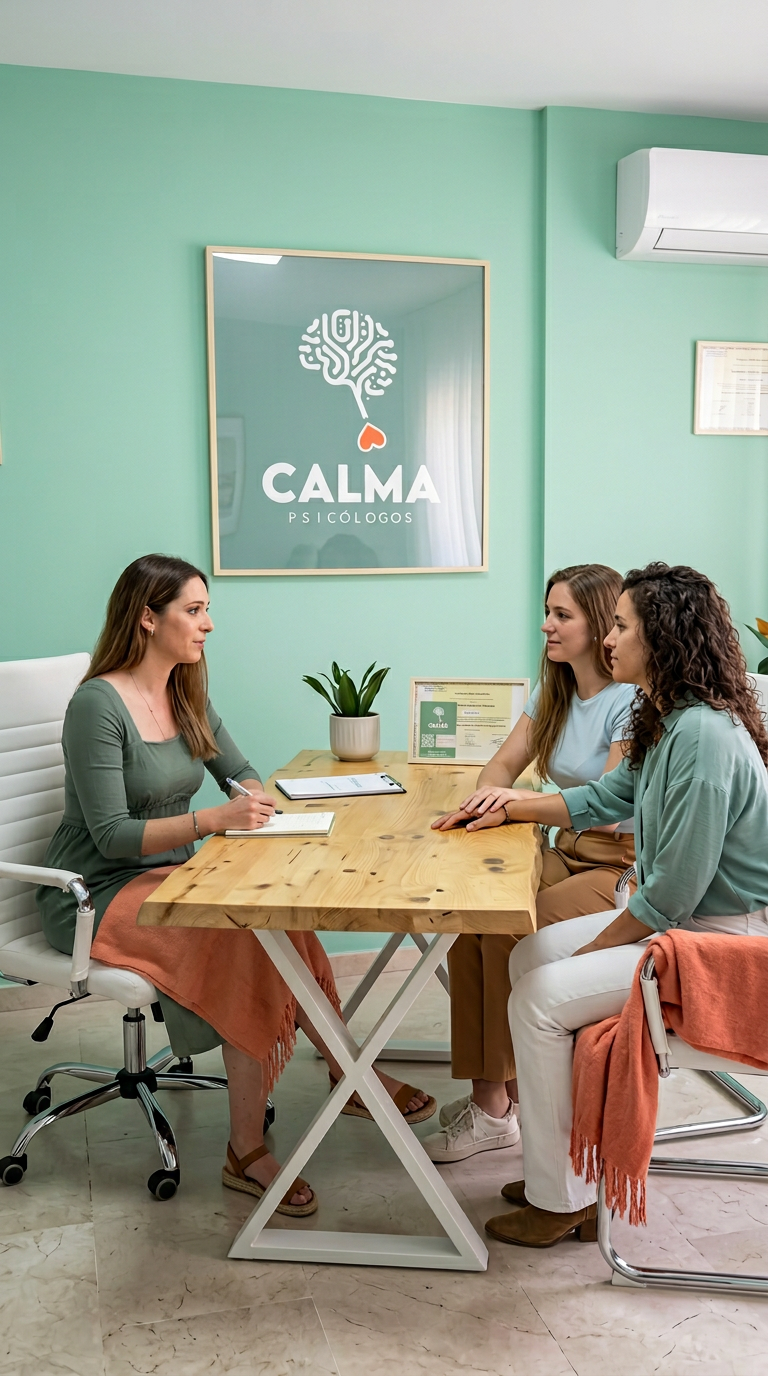
4. Children's education
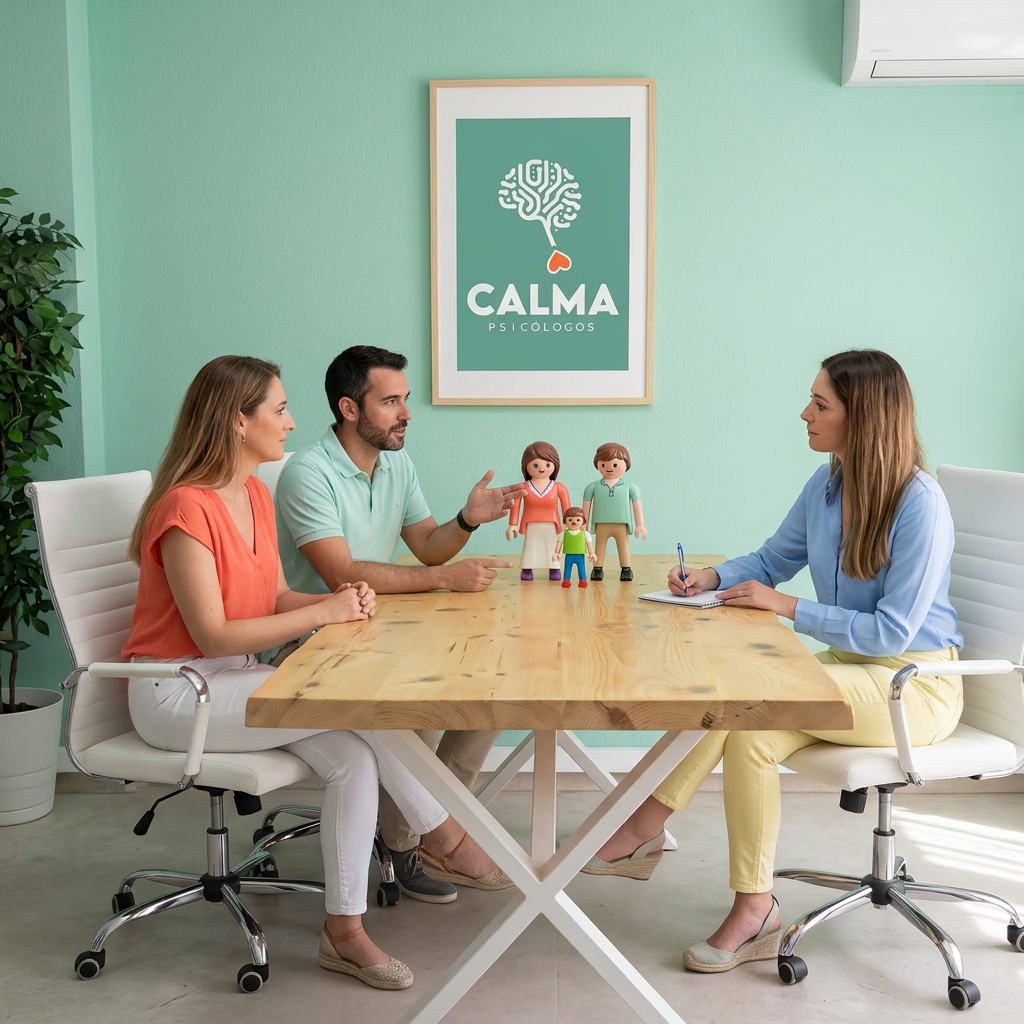
Differences in educational styles can become a significant source of conflict.
Therapy allows for reflection on:
- The values that it is desired to transmit.
- Educational coherence.
- Expectations of children.
- The way of exercising authority.
The aim is to find common ground that will allow us to act as a parenting team.
Related article: Can children break up a couple?
5. Personal dreams and projects
A healthy relationship should not only care for shared well-being, but also foster individual growth.
Therefore, it is important to reflect on:
- Personal dreams.
- Professional projects.
- Family goals.
- Mutual support.
- Future goals.
When both partners feel they can grow within the relationship, satisfaction and commitment increase.
Related article: Sometimes I get the feeling that more than a couple, we're flatmates…
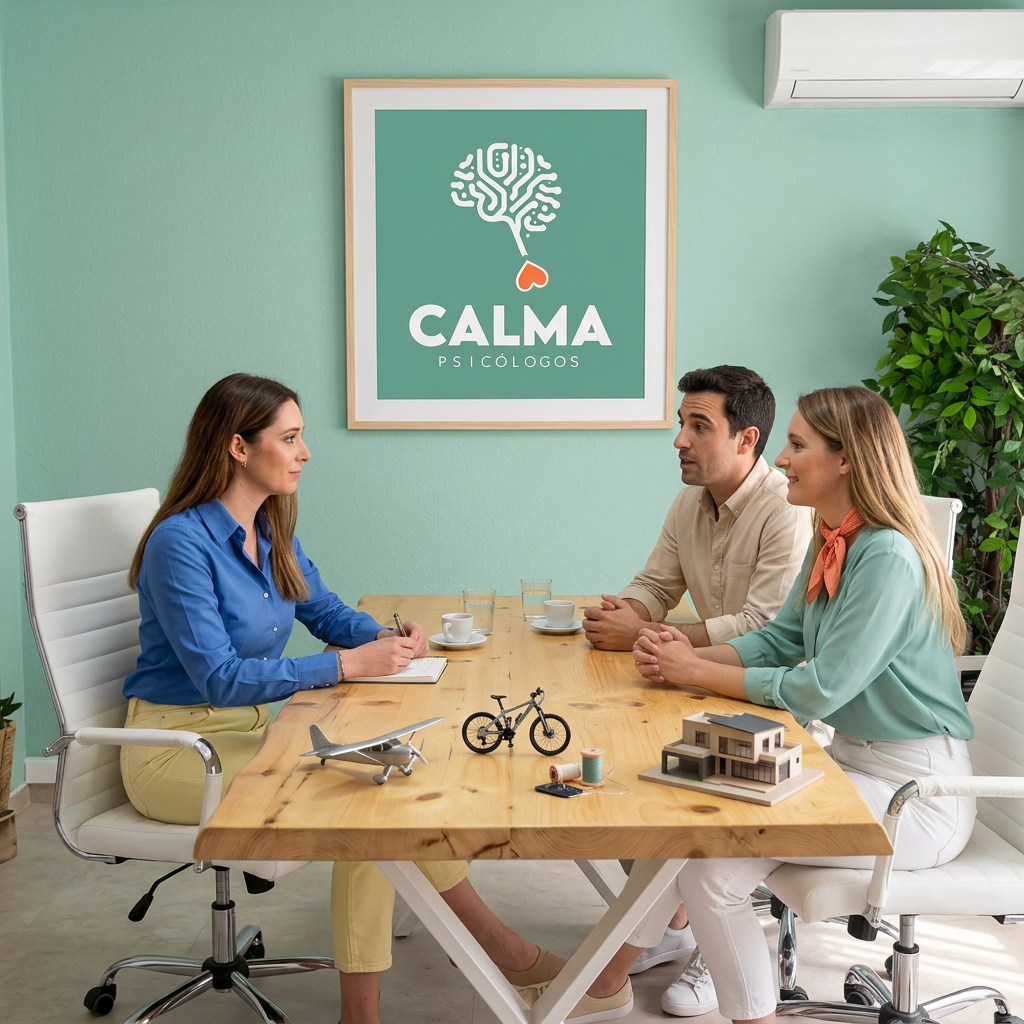
The construction of «the we»
One of the most important concepts of this approach is the construction of the «we.».
In every relationship, there are three protagonists:
- The self.
- You.
- We.
The strength of a couple depends largely on their ability to look after that shared space where projects, agreements, experiences, and common goals are built.
The «us» is strengthened by:
- Sincere communication.
- Trust.
- Respect.
- Collaboration.
- Emotional support.

Couples Therapy at CALMA Psychologists
At CALMA Psicólogos, we support couples with a respectful, empathetic approach, focused on the collaborative construction of solutions.
We believe that relationships can be transformed when there is a safe space to dialogue, understand each other, and explore new ways of connecting.
Our aim is not to decide who is right, but to help each couple find their own resources to build a healthier, more conscious, and more fulfilling relationship.
Conclusion
The Couple therapy from a social constructionist perspective It understands that relationships are built through dialogue and shared meanings.
When a couple learns to listen to each other, express their needs and build new conversations, real opportunities arise to overcome conflicts and strengthen their bond.
More than looking for culprits, this approach helps to create new relationship possibilities, favouring individual growth and common well-being.
First visit to the psychologist: what to say, what to expect...
Post written by Samara Valenzuela
If, after reading this entry, you believe you may need therapy and would like to learn more about the professionals who provide it at CALMA PSICOLOGOS, do not hesitate to click.
Bibliographical references
-
Tapia Figueroa, D. (2023). Couple therapy from social/relational constructivism: how to work with this perspective?. Psychology and Mind.
-
Gergen, K. J. (2006). The saturated self: dilemmas of identity in the contemporary world. Paidós.
-
Anderson, H. (1997). Conversation, Language and Possibilities: A Postmodern Approach to Therapy. Basic Books.
-
McNamee, S. and Gergen, K. J. (1992). Therapy as Social Construction. Sage Publications.
-
Shotter, J. (2011). Getting It: Withness-Thinking and the Dialogical. Hampton Press.