

How to manage anxiety when your partner asks for “a break”
When a couple considers the need for “a break”, intense emotions such as fear, anguish, insecurity or uncertainty are common. Learning to How to manage anxiety when your partner asks for a break can help you cope with this situation in a healthier way and prevent emotional distress from taking over.
While these types of breaks generate many doubts, they do not always signify the definitive end of the relationship. In many cases, they can become an opportunity to reflect, improve communication, and better understand each person's emotional needs.
You might be interested to know: What is ANXIETY
The English translation is: **What does your partner asking for “a break” mean?**
When a person asks for space within a relationship, there is usually an emotional or relational need that requires attention. This might include:
- Need for personal reflection
- Unresolved conflicts
- Emotional saturation
- External stress affecting the relationship
- Doubts about relationship dynamics
- Need to recover individual space
It's important to understand that asking for “some time” doesn't always mean an immediate breakup. Some couples use this space to reorganise emotions and assess what they need to continue in a healthier way.
However, the uncertainty generated by this situation usually triggers a significant emotional burden.
Recommended reading 7 types of anxiety

The anxiety generated by uncertainty in a relationship
One of the main triggers for anxiety is a lack of control over what will happen in the future. When a relationship goes on hold, many people experience constant thoughts related to the fear of abandonment or emotional loss.
The most frequent symptoms include:
- Repetitive thoughts about the relationship
- Insomnia or difficulty sleeping
- Constant need for answers
- Feeling of distress
- Changes in appetite
- Difficulty concentrating
- Irritability
- Emotional dependency
The mind often attempts to fill information gaps with negative interpretations, further increasing emotional anxiety.
You might be interested in this article: How to know if I have a dependent attachment style?
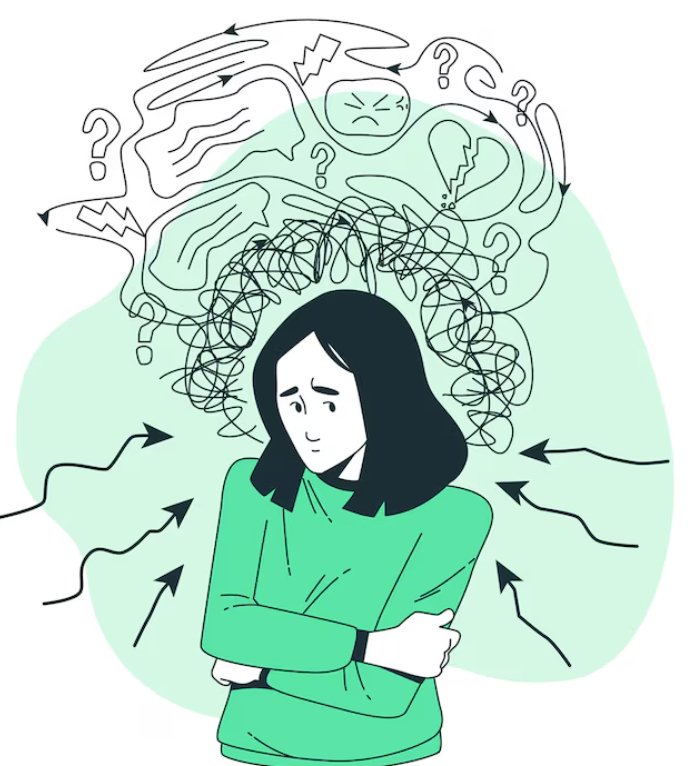
Why can this situation be so painful?
Romantic relationships activate deep emotional needs related to attachment, security, and affective validation. When emotional distance or uncertainty arises, previous emotional wounds related to rejection or abandonment can be triggered.
Furthermore, many people feel that their emotional stability depends entirely on the relationship. This causes any threat to the bond to generate an intense reaction of anxiety.
Recommended reading When to go to a psychologist
Cognitive behavioural therapy particularly works on our interpretation of situations. It's not solely what happens that causes suffering, but also the way we interpret it.
Thoughts like:
- “He/She surely wants to leave me.”
- “I don't matter to him/her anymore.”
- “I'm not going to be able to stand it.”
- “I'm going to be on my own.”
They fuel emotional distress and increase feelings of loss of control, stress, and anxiety.
You might be interested in this article: Am I stressed or anxious?

How to manage anxiety when your partner asks for a break
Maintain clear and respectful communication
Speaking from a place of calm and honesty can help reduce uncertainty. If possible, it is advisable to clarify aspects such as:
- To take a break / To have some space“
- How long will it last
- What limits will there be
- What does each person expect from this break
Clear communication prevents harmful interpretations and reduces misunderstandings.
You might be interested in this article: «Intimacy vs Privacy»
2. Don't turn uncertainty into obsession
It's common to fall into impulsive behaviours such as:
- Constantly review social media
- To continually seek explanations
- To phone or write obsessively
- Analyse every detail of past conversations
Although these behaviours attempt to alleviate anxiety, they usually increase emotional suffering.
Learning to tolerate uncertainty is an important part of the process.
Do you obsess over things? Read about OCD
3. Make the most of this time to reconnect with yourself
This period can also be used to reclaim personal space that may have been neglected.
It is recommended:
- Take up hobbies again
- Maintain healthy routines
- To exercise
- Spend time with supportive people
- Dedicar tiempo al autocuidado
- Working on self-esteem
Strengthening your relationship with yourself helps reduce emotional dependence.
Related article: What is Self-Esteem?
4. Learn to manage negative thoughts
Anxiety is often fueled by catastrophic and anticipatory thoughts. Some useful psychological techniques include:
- Cognitive restructuring
- Mindfulness
- Breathing techniques
- Emotional register
- Relaxation techniques
These tools help to reduce emotional intensity and improve anxiety regulation.
Related article Mindfulness is the practice of focusing on the present moment.
5. Establish healthy emotional boundaries
During this stage, it is important to identify what you need to protect your emotional well-being.
Setting boundaries can include:
- Respect agreed spaces
- Do not rely exclusively on the other person's response
- Prioritise your mental health
- Avoid harmful conversations and arguments.
Related article: Stop getting bogged down in arguments
A healthy relationship should not be built on constant fear or dependency.


When to attend psychological therapy or couples therapy?
Seeking professional help can be particularly useful when:
- Anxiety interferes with your daily life
- There are depressive symptoms.
- There is emotional dependency
- Communication in couples is very deteriorated
- Constant arguments occur
- Anxiety attacks or obsessive thoughts appear
Psychological therapy can help you to better understand your emotions, strengthen your self-esteem and learn practical tools for dealing with emotional uncertainty.
Related article: 5 signs it might be a good time to go to couples therapy
Psychological therapy for anxiety and relationship problems in Fuengirola and Mijas
At CALMA Psicólogos, we work with individuals experiencing relationship crises, emotional anxiety, and difficulties in their partnerships.
From an evidence-based cognitive-behavioural perspective, we help develop strategies to manage intense emotions, improve communication and strengthen emotional well-being.
We offer in-person therapy in Fuengirola and Mijas, as well as online sessions in Spanish and English.

Conclusion
Learn How to manage anxiety when your partner asks for a break it implies accepting uncertainty, looking after your emotional well-being, and avoiding acting impulsively out of fear.
Although these situations can be very painful, they can also become an opportunity for personal growth, emotional reflection, and the building of more conscious and healthier relationships.
Related article: 8 types of couples therapy
Post written by Samara Valenzuela
If, after reading this entry, you believe you may need therapy and would like to learn more about the professionals who provide it at CALMA PSICOLOGOS, do not hesitate to click.
BIBLIOGRAPHICAL REFERENCES
- American Psychiatric Association (2013). Diagnostic and Statistical Manual of Mental Disorders (5th ed.). Arlington: American Psychiatric Publishing.
- Beck, J. S. (2011). Cognitive Behavioural Therapy: Basics and Beyond. New York: Guilford Press.
- Bowlby, J. (1988). A Secure Base: Parent-Child Attachment and Healthy Human Development. Basic Books.
- Dattilio, F.M. & Padesky, C.A. (2004). Cognitive therapy with couples. Bilbao: Editorial Desclée De Brouwer.
- Ellis, A. (2003). Reason and Emotion in Psychotherapy. New York: Citadel Press.
- Johnson, S. M. (2008). Hold Me Tight: Seven Conversations for a Lifetime of Love. Little, Brown Spark.
- Rey, P. (20 March 2024). How to manage the anxiety generated by your partner asking for “a break”. Psychology and Mind Portal.
- Sbarra, D.A. & Emery, R.E. (2005). The emotional sequelae of nonmarital relationship dissolution: Analysis of change and intraindividual variability over time. Personal Relationships, 12(2), 213–232.