

The objective of couples therapy is to address and resolve issues within a romantic relationship, improve communication, and strengthen the bond between partners.
Romantic relationships go through different stages over time. It's normal for disagreements, communication problems, or moments of emotional exhaustion to appear. However, when conflicts become repetitive or cause suffering, it can be difficult to find solutions without professional help.
At CALMA Psicólogos, we address couples therapy in Fuengirola and Mijas, helping partners understand what's happening in their relationship, improve their communication, and build healthier, more satisfying bonds.
You might be interested in reading: 8 Types of Couples Therapy
What is the true aim of couples therapy?
There doesn't have to be just one objective. Many people believe that couples therapy simply consists of learning to communicate better or resolving specific arguments. Although these aspects are important, the goal of couples therapy goes much further.
The main aim is to help both members of the relationship to modify dynamics that cause distress, strengthen their emotional bond, and develop new, healthier, and more satisfying ways of relating to each other.
Therapy doesn't aim to determine who is right or who is responsible for the problems. Its goal is to understand how both people interact and what changes they can make to improve the relationship.
Even improving the relationship, despite it. That is to say, sometimes you come to the conclusion that the best relationship can be not being in a romantic relationship. And that's okay.
Recommended reading Hmm?An ante-room to divorce or renewed love?
Any type of success in therapy It has a lot to do with the bond and trust that is generated between therapist and patient.
You might be interested in reading: Therapeutic alliance: what it is

Understanding the problem isn't always enough
One of the most important aspects we observe in consultations is that many couples know perfectly well what they should do to improve their relationship.
They often know recommendations such as:
- to listen without interrupting
- Expressing emotions appropriately
- avoid destructive criticism
- dedicate more time to the relationship
- Show affection and recognition
However, knowing it does not necessarily mean being able to do it.
Just as a person knows they should stop smoking to overcome an addiction, many couples know how they should communicate, but find it difficult to put into practice when intense emotions arise.
That's why couples therapy works so much on both understanding and real behaviour change.
Recommended reading Stop getting caught up in arguments

The importance of transforming behaviours
Research into romantic relationships shows that the quality of a relationship largely depends on the everyday behaviours of both members.
Therapy allows for the identification of:
- Behaviours that fuel conflict
- Harmful communication patterns
- Disproportionate emotional reactions
- unrealistic expectations
- Difficulties expressing needs
From there, new forms of interaction are developed that promote emotional connection and problem-solving.
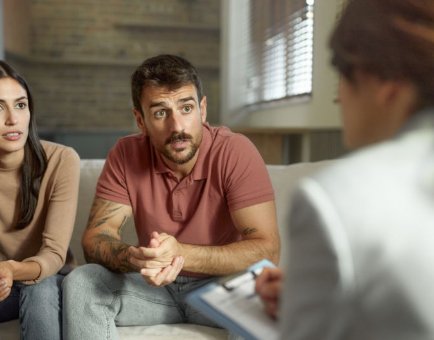
Beyond theory: generating different experiences
Contemporary psychology has effective tools to facilitate profound changes in relationships.
Therapeutic work isn't solely about talking about problems, but about helping couples experience new ways of relating to each other.
When people start acting differently, their emotions, perceptions, and how they interpret conflicts also change.
Therefore, an important part of the therapy consists of transferring the learning from the session to everyday life.
Recommended reading Holiday conflicts
Improve couple communication
Communication is one of the fundamental pillars of any healthy relationship. You might be interested in reading our 12 tips for managing arguments.
In couples therapy, skills worked on include:
- Active listening
- Emotional validation
- Assertive expression of needs
- Managing criticism and disagreements
- conflict resolution
Improving communication doesn't mean stopping arguments, but learning to manage differences in a more constructive way.
Related article: Sometimes I get the feeling that more than a couple, we're flatmates…

The role of one-to-one sessions
On many occasions, relationship conflicts are also related to personal difficulties of one of its members.
Problems such as:
- anxiety
- insecurity
- Low self-esteem
- emotional dependence
- difficulties regulating emotions
can directly influence the relationship.
For this reason, in certain cases, couples therapy can be supplemented with individual sessions that help to work on personal aspects relevant to the evolution of the process.
Related article: What to do if your partner asks for a break
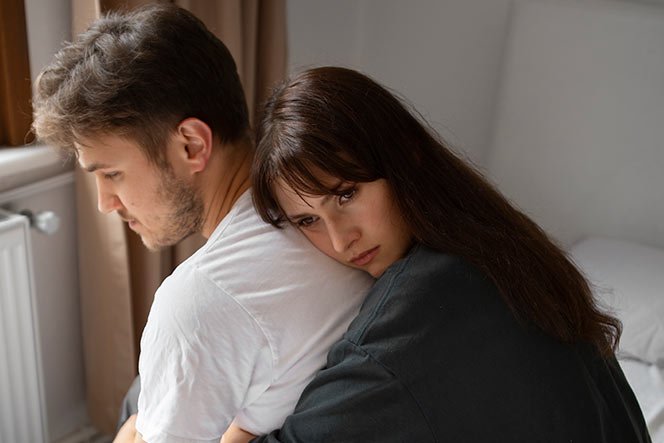
The importance of sharing common goals
One of the first steps in therapy is exploring what each member expects from the relationship.
Sometimes both wish to improve the relationship, but they have different needs. At other times, incompatible objectives may even exist.
Setting shared goals allows for the construction of a common direction and facilitates therapeutic work.
Obstacles that can make couples therapy difficult
There are certain situations that can complicate the therapeutic process.
For example:
- to go solely to prove the other person is in the wrong
- attend without any real intention of improving the relationship
- to use therapy to justify an already decided breakup
In these cases, the work usually focuses initially on clarifying expectations and objectives before addressing concrete conflicts.
Related article: Why do some couples cheat and others don't?

The importance of looking after a long-term relationship
All relationships need constant attention, dedication and care.
Over time, the intensity of initial infatuation and spontaneous desire can lessen. This doesn't necessarily mean there's a problem, but rather that the relationship needs to be actively cultivated.
Couples who maintain strong bonds often share some characteristics:
- They enjoy their time together
- They support each other
- Express affection frequently
- show admiration and respect
- They share common projects
- they face problems as a team
These behaviours strengthen the emotional bond and promote more stable and satisfying relationships.
Recommended reading Reconnect with Your Partner: CHALLENGE
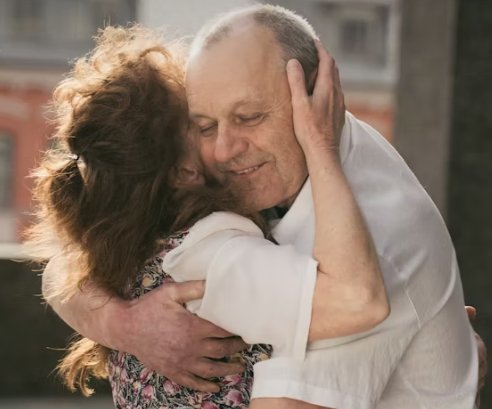
When can couples therapy help?
Couples therapy can be helpful when situations like these arise:
- frequent discussions
- communication problems
- emotional distancing
- loss of trust
- jealousy
- sexual difficulties
- life crises
- Infidelity
- Neighbourhood disputes
The sooner intervention occurs, the easier it generally is to modify the patterns that perpetuate conflict.
Conclusion
The aim of couples therapy is not solely to resolve specific problems, but to help build a healthier, more balanced, and satisfying relationship.
Through therapeutic work, it is possible to improve communication, modify behaviours that cause distress, strengthen emotional connection and develop tools that allow future challenges to be faced in a healthier way.
At CALMA Psicólogos, we support couples from Fuengirola and Mijas who wish to regain well-being in their relationship and build a stronger, more conscious bond.
Post written by Samara Valenzuela
If, after reading this entry, you believe you may need therapy and would like to learn more about the professionals who provide it at CALMA PSICOLOGOS, do not hesitate to click.
Bibliographical references
- Psicología y Psicoterapia Miguel Ángel. (2019). The objective of couples therapy is to address and resolve issues within a romantic relationship, improve communication, and strengthen the bond between partners.. Psychology and Mind.
- Castanyer, O. (2003). Assertiveness: the expression of healthy self-esteem. Desclée de Brouwer.
- Gottman, J. M. & Silver, N. (2015). The Seven Principles for Making Marriage Work. Harmony Books.
- Lebow, J. L., Chambers, A. L., Christensen, A., & Johnson, S. M. (2012). Research on the treatment of couple distress. Journal of Marital and Family Therapy.