
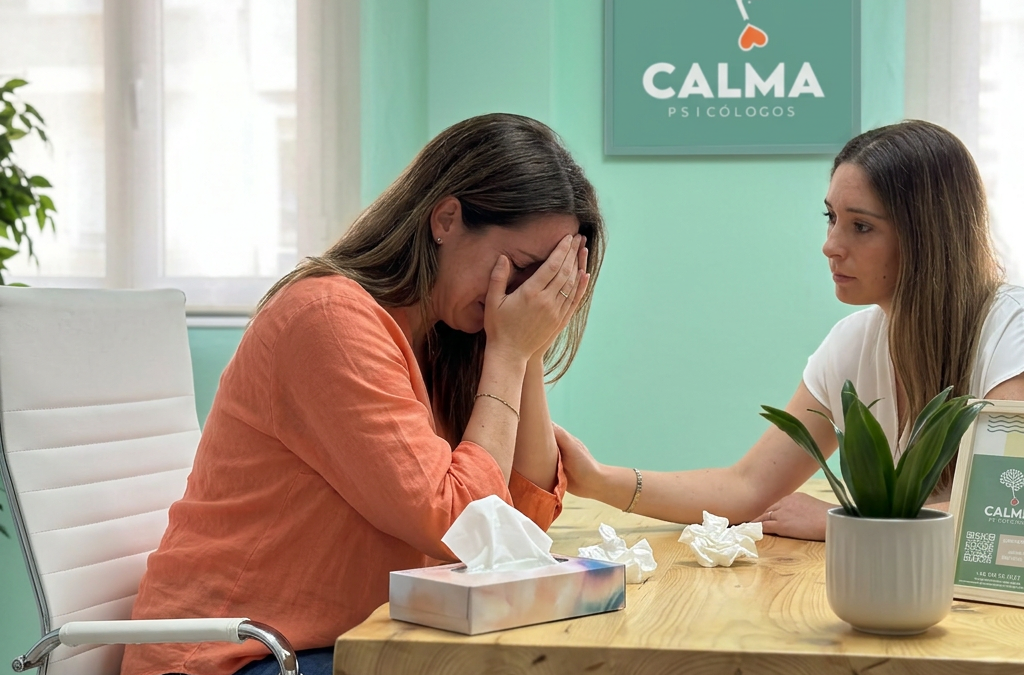
Depression: symptoms, causes and treatment in Fuengirola and Mijas
The Depression in Fuengirola and Mijas It is one of the most frequent mental health problems today. Although many people use the word «depression» to refer to moments of sadness or despondency, the reality is that it is a complex psychological disorder that can profoundly affect personal, family, social, and professional life.
We can all go through difficult situations that cause sadness, frustration, or demotivation. However, when these feelings persist for weeks or months, interfere with daily functioning, and cause significant emotional distress, it is essential to seek professional help.
At CALMA Psicólogos, we help people suffering from depression to regain emotional balance, improve their well-being, and enjoy life again.
Recommended reading First visit to the psychologist: What to tell, what to expect
What is depression?
Depression is a mood disorder characterised by a persistent feeling of sadness, emotional emptiness, hopelessness, and loss of interest in activities that were previously enjoyable.
This isn't a lack of willpower or a negative attitude. It's also not something that can be fixed simply by «pulling yourself together.» Depression involves emotional, cognitive, physical, and behavioural changes that require specialist attention.
According to the World Health Organisation (WHO), over 300 million people worldwide suffer from some form of depressive disorder.
Recommended reading I have depression or is it just tiredness

Difference between sadness and depression
Feeling sad is a natural response to loss, disappointment, or difficult situations.
Depression, on the other hand:
- It lasts for weeks or months.
- It significantly interferes with daily life.
- Reduce the capacity to enjoy.
- It affects self-esteem.
- Causes persistent physical and emotional changes.
While sadness tends to fluctuate and improve with time, depression tends to persist or worsen if left untreated.
Recommended reading Difficult duel

Main symptoms of depression
Symptoms can vary from person to person, although there are some common signs.
Emotional symptoms
- Persistent sadness.
- Feeling of emptiness.
- Despair.
- Irritability.
- Apathy.
- Loss of interest in usual activities.
- Constant feeling of guilt.
Cognitive symptoms
- Recurring negative thoughts.
- Low self-esteem.
- Difficulty concentrating.
- Memory problems.
- Indecision.
- A pessimistic view of the future.
Physical symptoms
- Constant fatigue.
- Lack of energy.
- Muscle or body aches with no clear medical cause.
- Digestive problems.
- Sleep disturbances.
- Changes in appetite.
Behavioural symptoms
- Social isolation.
- Reduction of activities.
- Abandoning hobbies.
- Lower work or academic performance.
- Neglected personal self-care.

Red flags that should not be ignored
Some people normalise their discomfort for too long.
It is advisable to consult with a psychologist when situations such as these arise:
- Feeling sad most of the time.
- To have lost the enthusiasm for almost everything.
- Having difficulty getting up in the mornings.
- Feeling that nothing is worthwhile.
- Constantly thinking about past mistakes.
- Having thoughts related to death or suicide.
The sooner you intervene, the faster the recovery usually is.
Recommended reading Severe depression or major depression

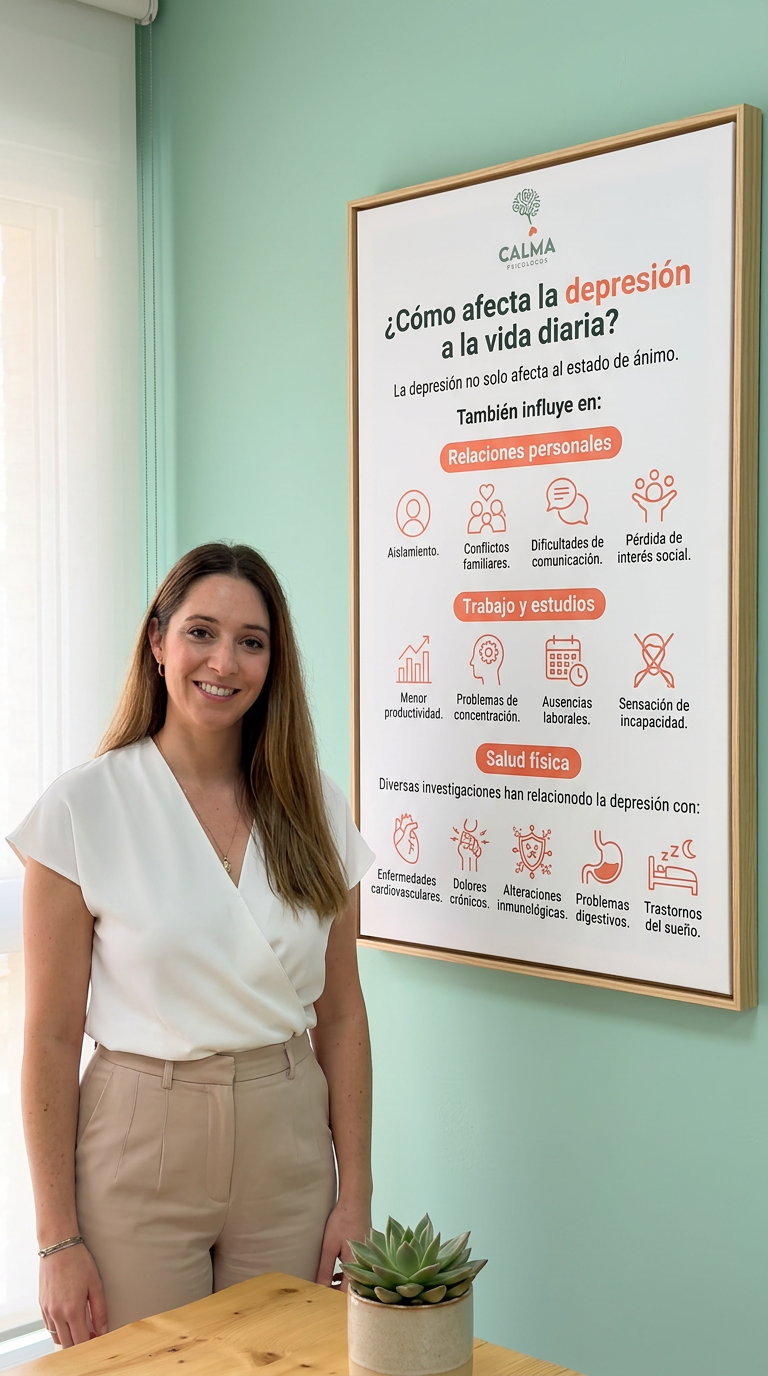
What are the causes of depression?
Depression often appears due to a combination of several factors.
Biological factors
Some people have a greater genetic or neurochemical vulnerability to developing depressive disorders. Influenced by:
- Neurotransmitter alterations.
- Genetic predisposition.
- Hormonal changes.
- Medical conditions.
Traumatic experiences
Difficult events can act as triggers:
- Duels.
- Divorces.
- Accidents.
- Serious illnesses.
- Abuse.
- Emotional neglect.
Prolonged stress
Situations maintained over time can favour the onset of depression:
- Work-related issues.
- Economic difficulties.
- Family conflicts.
- Overload of responsibilities.
Psychological factors
Certain thinking styles increase vulnerability:
- Perfectionism.
- Excessive self-criticism.
- Low self-esteem.
- A constant need for approval.
- Recurring negative thoughts.
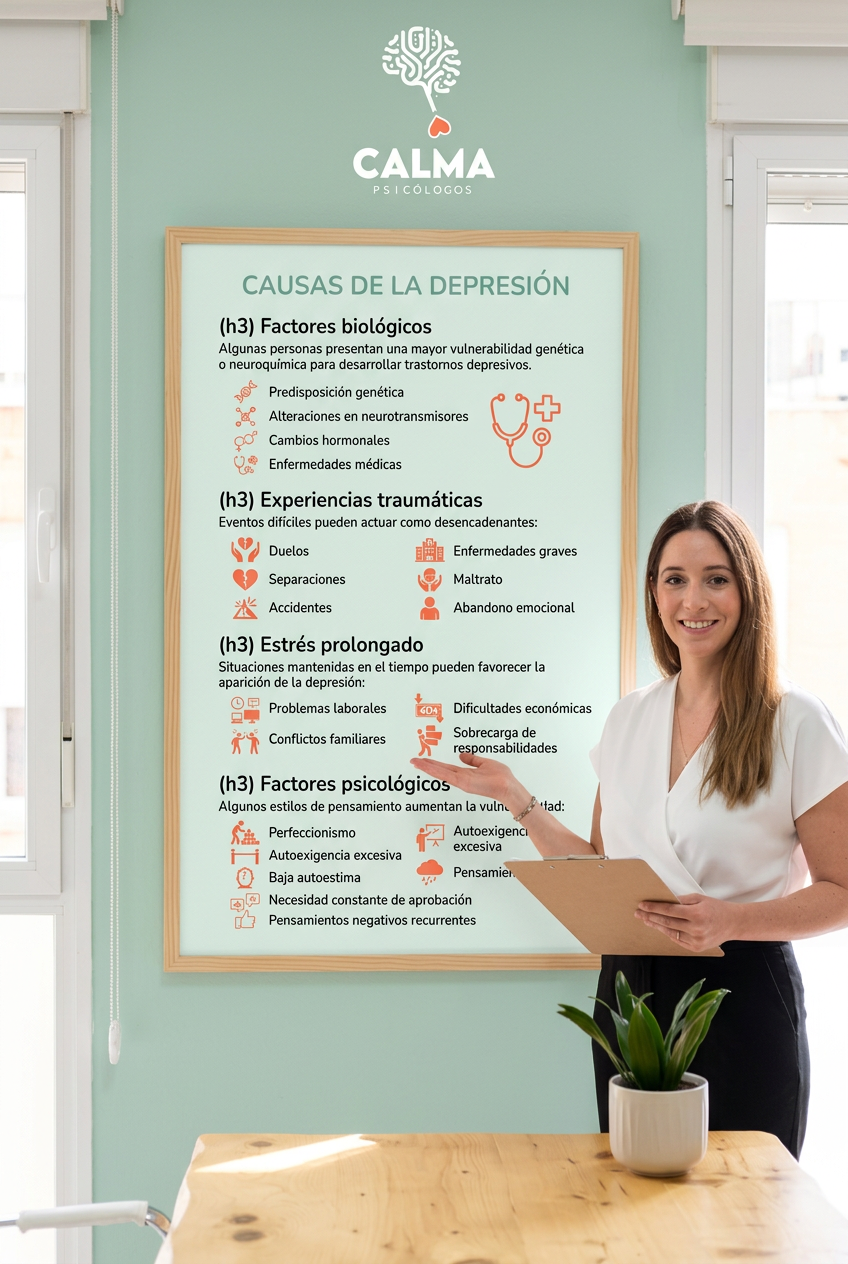
Types of depression
Not all cases of depression present in the same way.
Major depressive disorder
It's the best-known form and usually causes significant deterioration in daily life.
Persistent depressive disorder (dysthymia)
It is characterised by symptoms that are less severe but last for a longer period of time.
Many people live with this form of depression for years without receiving treatment.
Peripartum depression
It can occur during pregnancy or after the birth of a child. The term ‘postpartum’ used to be more commonly used
Intense sadness, anxiety, irritability, and difficulty forming an emotional bond with the baby.
An extension of this type: Peripartum depression
Seasonal affective disorder
It mainly appears during the months with less sunlight.
It is more common in autumn and winter.
Depression associated with bipolar disorder
People with bipolar disorder alternate between depressive episodes and episodes of mania or hypomania.
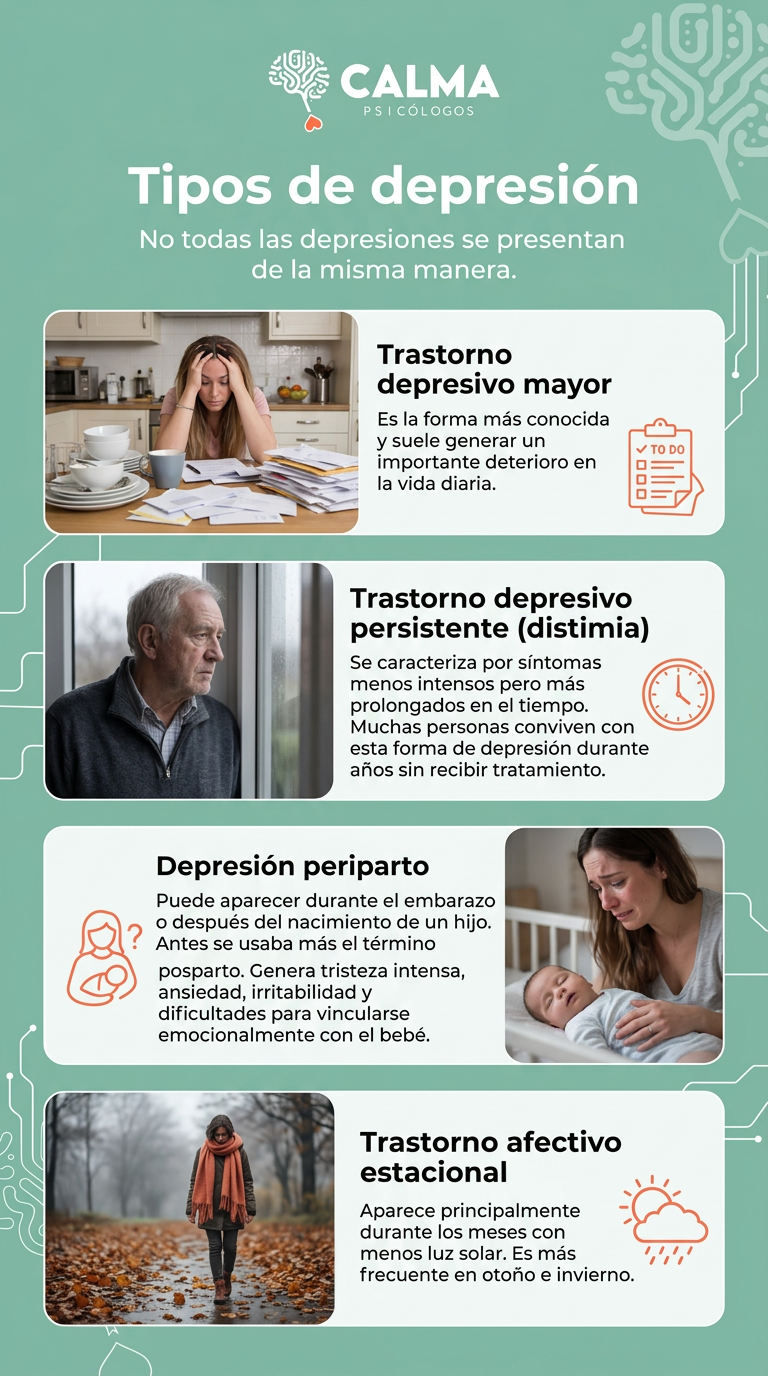
Depression can affect daily life in many ways.
Depression doesn't just affect your mood.
It also influences:
Personal relationships
- Isolation.
- Family conflicts.
- Communication difficulties.
- Loss of social interest.
Work and studies
- Lower productivity.
- Concentration problems.
- Absences from work.
- Feeling of inability.
Physical health
Various research has linked depression with:
- Cardiovascular diseases.
- Chronic pain.
- Immunological alterations.
- Digestive problems.
- Sleep disorders.
How do I know if I need psychological help?
It is advisable to seek professional support when:
- Symptoms last for more than two weeks.
- The discomfort is interfering with your daily life.
- You feel you cannot manage the situation on your own.
- You have lost interest in almost everything.
- Your self-esteem is very low.
- Thoughts Related to Death or Suicide Appear.
Asking for help doesn't mean you're weak. It means you're starting to take care of your mental health.
Recommended reading When to see a psychologist
Psychological treatment for depression in Fuengirola and Mijas
The good news is that depression can be treated and overcome.
At CALMA Psicólogos, we carry out an individualised assessment to understand which factors are maintaining the problem and to design a therapeutic plan tailored to each person.
This is a reality we work with every day, and it is part of the services offered by our team of psychologists:
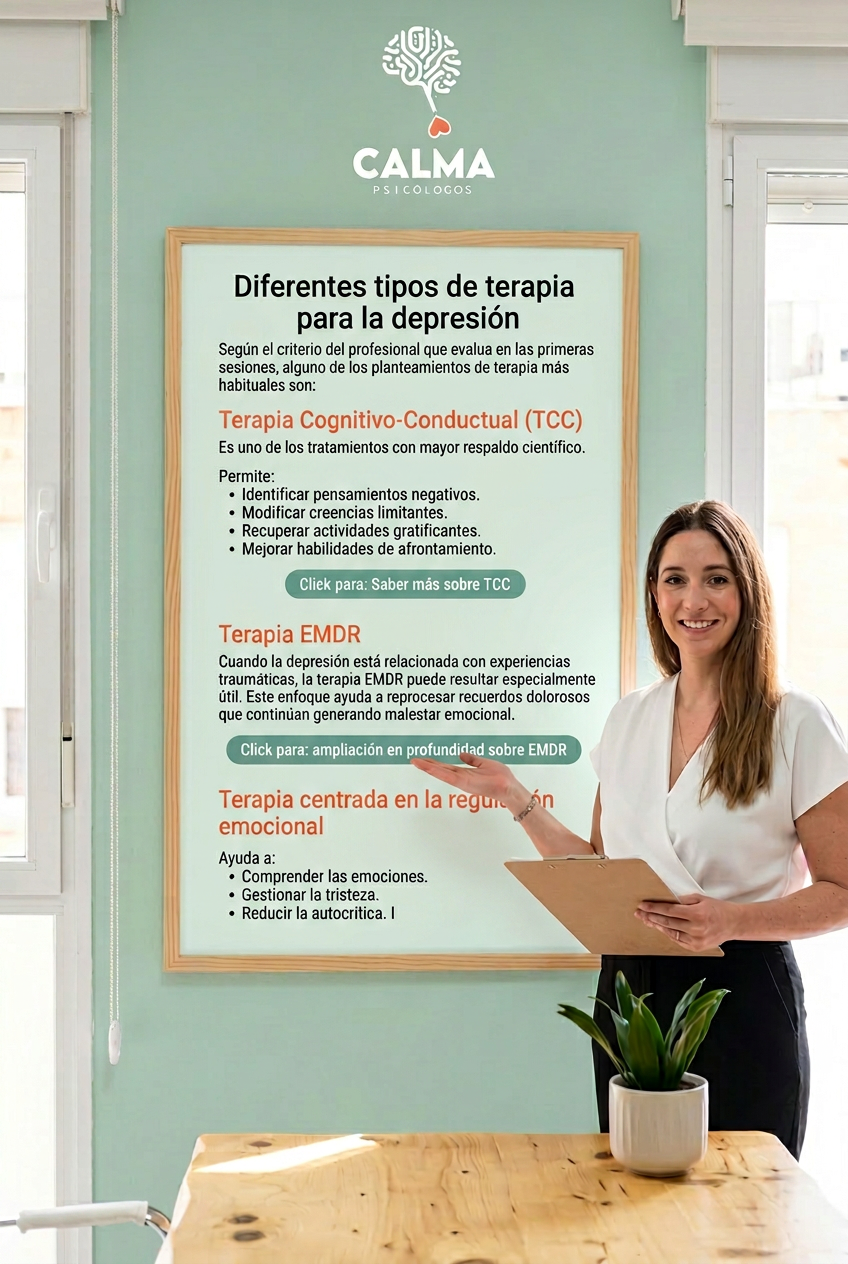
Different types of therapy for depression:
According to the criteria of the professional evaluating in the initial sessions, some of the most common therapy approaches are:
Cognitive Behavioural Therapy (CBT)
It is one of the treatments with the greatest scientific backing.
Allow
- Identify negative thoughts.
- Modify limiting beliefs.
- Regain rewarding activities.
- Improve coping skills.
EMDR Therapy
When depression is linked to traumatic experiences, EMDR therapy can be particularly helpful.
This approach helps to reprocess painful memories that continue to generate emotional distress.
Emotionally Focused Therapy
Help with:
- Understanding emotions.
- Managing sadness.
- Lessen self-criticism.
- Increase self-compassion.
Extension Emotional Regulation
Coordination with psychiatry
In some cases, it may be advisable to supplement psychotherapy with pharmacological treatment prescribed by a psychiatrist.
The combination of both interventions usually offers excellent results when the symptomatology is moderate or severe.
Can depression be overcome?
Yes.
Definitely yes.
Recovery is possible.
With the right treatment, many people achieve:
- To regain enthusiasm.
- Improve your self-esteem.
- To enjoy everyday activities again.
- Develop healthier relationships.
- Regain energy and motivation.
- Develop tools for relapse prevention.
Each process is different, but improvement often begins when a person stops facing the problem alone.
To be successful in the process, it is vitally important to achieve a good: Therapeutic alliance
Regaining well-being is possible
Depression can make everything seem more difficult, more burdensome, or even impossible. However, with professional support, it's possible to understand what's happening, reclaim personal resources, and build a more satisfying and balanced life.
When to seek professional help
You don't have to wait until you hit rock bottom to go to therapy.
Seeking early help can prevent symptoms from worsening and facilitate a quicker recovery.
If you feel that sadness, apathy, hopelessness, or lack of energy are conditioning your life, talking to a professional can make a big difference.

Do you need psychological help for depression?
At CALMA Psychologists we have specialists in the treatment of Depression in Fuengirola and Mijas. If you are going through a difficult time and feel you need support, we will be happy to accompany you in your process of recovery and emotional well-being.
Post written by Samara Valenzuela
If, after reading this entry, you believe you may need therapy and would like to learn more about the professionals who provide it at CALMA PSICOLOGOS, do not hesitate to click.
Bibliographical references
-
- American Psychiatric Association. (2022). Diagnostic and Statistical Manual of Mental Disorders (DSM-5-TR). American Psychiatric Publishing.
- Beck, A. T. (1979). Cognitive Behavioural Therapy for Depression. Guilford Press.
- Cuijpers, P., Karyotaki, E., Reijnders, M., & Ebert, D. D. (2020). The effects of psychotherapies for depression on response, remission, reliable change, and deterioration: A meta-analysis. Acta Psychiatrica Scandinavica, 142(3), 179-192.
- National Institute for Health and Care Excellence (NICE). (2022). Depression in adults: treatment and management. NICE Guideline NG222.
- World Health Organization (WHO). (2023). Depression. Retrieved from: https://www.who.int/es/news-room/fact-sheets/detail/depression
- Seligman, M. E. P. (2006). True happiness. Ediciones B.
- World Health Organization. (2023). Depression. Retrieved from: https://www.who.int/news-room/fact-sheets/detail/depression
- Mayo Clinic. (2024). Depression (major depressive disorder).
- American Psychological Association (APA). (2023). Clinical Depression. Retrieved from: https://www.apa.org/topics/depression
- Cuijpers, P., Quero, S., Noma, H., Ciharova, M., Miguel, C., Karyotaki, E., & Furukawa, T. A. (2021). Psychotherapies for depression: A network meta-analysis covering efficacy, acceptability and long-term outcomes. World Psychiatry, 20(2), 283-293.