

Major Depression: symptoms, causes and psychological treatment in Fuengirola
La depresión mayor, también conocida como depresión clínica, es un trastorno del estado de ánimo que causa un sentimiento persistente de tristeza y una pérdida de interés en realizar diferentes actividades. Esto puede afectar a tus pensamientos, comportamiento, estado de ánimo y bienestar. Puede llevar a una variedad de problemas emocionales y físicos.
Major depression is one of the most frequent psychological disorders and, at the same time, one of the most disabling. It is characterised by the presence of a persistently low mood, loss of interest or pleasure in activities that were previously enjoyable, and significant impairment in different areas of daily life.
The Major depression in Fuengirola and Mijas It can affect work performance, family relationships, social life, self-esteem, and physical health. Although many people associate depression solely with sadness, this disorder involves much more than feeling sad for a few days.
The World Health Organisation estimates that millions of people globally experience depressive symptoms that significantly impact their quality of life.
Recommended reading First visit to the psychologist: What to tell, what to expect
Symptoms of major depression
The symptoms can vary from person to person, but they usually last for at least two weeks and cause a significant deterioration in daily life.
Emotional cues
- Persistent sadness.
- Feeling of emotional emptiness.
- Irritability or frequent frustration.
- Despair regarding the future.
- Excessive guilt.
- Low self-esteem.
Cognitive symptoms
- Difficulty concentrating.
- Problems making decisions.
- Recurring negative thoughts.
- Feeling of uselessness.
- Loss of self-confidence.
Physical symptoms
- Constant fatigue.
- Lack of energy.
- Sleep disturbances.
- Changes in appetite.
- Weight loss or gain.
- Physical pain with no apparent medical cause.
Behavioural symptoms
- Social isolation.
- Cessation of usual activities.
- Decline in academic or work performance.
- Lack of motivation.
In the most severe cases, thoughts related to death or suicide may appear, which require immediate professional attention.

How do I know if I have major depression?
Many people wonder if they are going through a difficult phase or if they actually suffer from a depressive disorder.
Some questions that can help you identify warning signs are:
- Am I feeling sad most of the time?
- Have I stopped enjoying activities I used to like?
- Am I having trouble sleeping or sleeping too much?
- Do I have difficulty concentrating or making decisions?
- Do I feel hopeless about the future?
- Do you constantly feel tired?
If these difficulties persist for several weeks and affect your daily life, it is advisable to seek professional help.
Recommended reading Differences with common depression

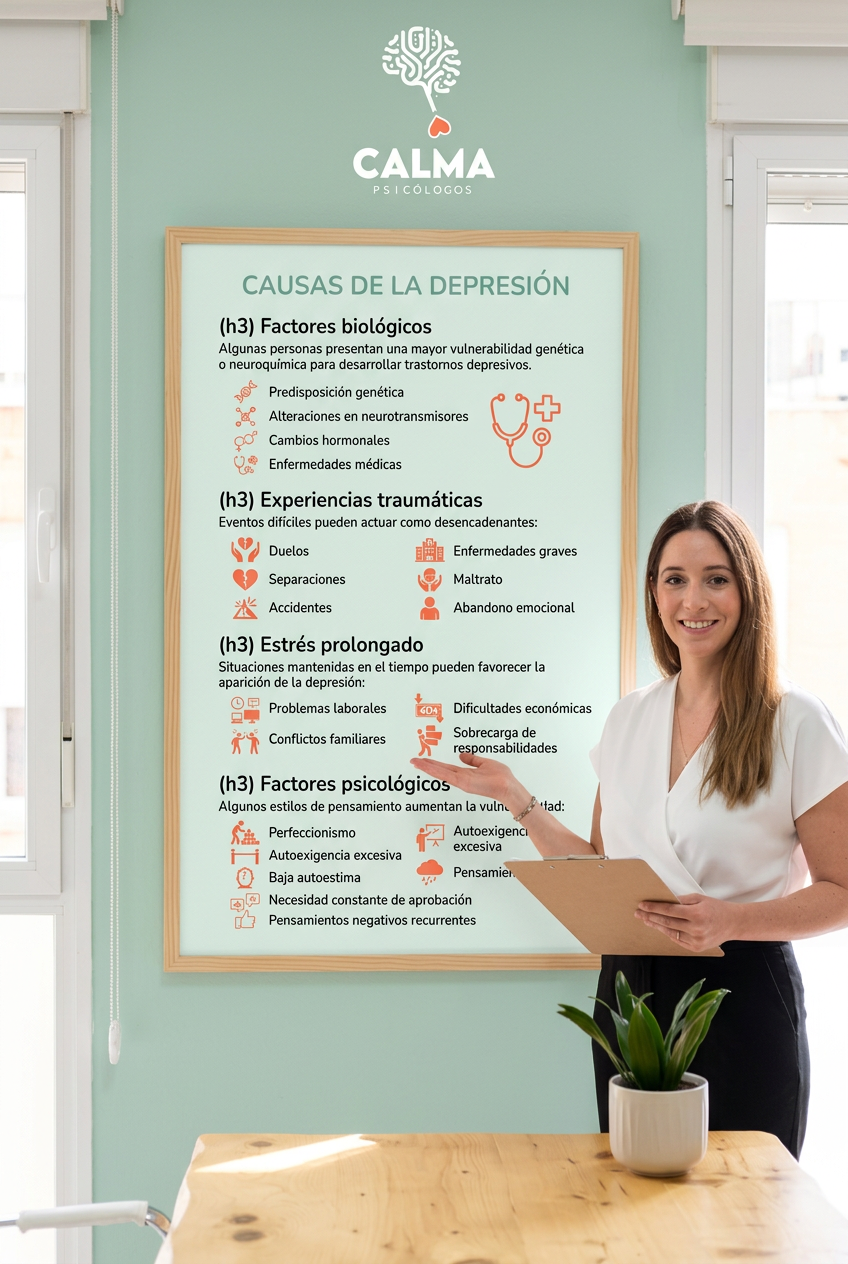
Causes of major depression
There isn't a single cause that explains the onset of this disorder. Usually, different biological, psychological, and social factors are involved.
Biological factors
- Alterations in neurotransmitters such as serotonin, dopamine and noradrenaline.
- Genetic predisposition.
- Hormonal changes.
- Chronic medical conditions.
Psychological factors
- Low self-esteem.
- Negative thinking styles.
- Traumatic experiences.
- Unfinished duels.
Social and environmental factors
- Workplace stress.
- Economic problems.
- Family or couple conflicts.
- Social isolation.
- Major life changes.
On many occasions, depression appears due to the combination of several of these factors.
Recommended reading Difficult duel
Major depression and anxiety
Anxiety and depression often appear together very frequently.
When a person remains in a state of constant worry, stress or emotional tension for long periods, they can end up developing depressive symptoms.
Among the most common manifestations are:
- Excessive worry.
- Constant nervousness.
- A constant feeling of danger.
- Insomnia.
- Mental fatigue.
- Difficulties concentrating.
For this reason, it is important to carry out a comprehensive psychological assessment to identify all the variables involved.
Recommended reading Anxiety

Consequences of major depression
When left untreated, depression can significantly affect different areas of life.
Personal consequences
- Deterioration of self-esteem.
- Feeling of failure.
- Loss of motivation.
Family consequences
- Relationship conflicts.
- Emotional distancing.
- Communication difficulties.
Workplace consequences
- Performance decrease.
- Concentration problems.
- High staff absenteeism.
Physical consequences
- Sleep disturbances.
- Digestive problems.
- Higher cardiovascular risk.
- Worsening of chronic diseases.
Recommended reading What does not work for anxiety
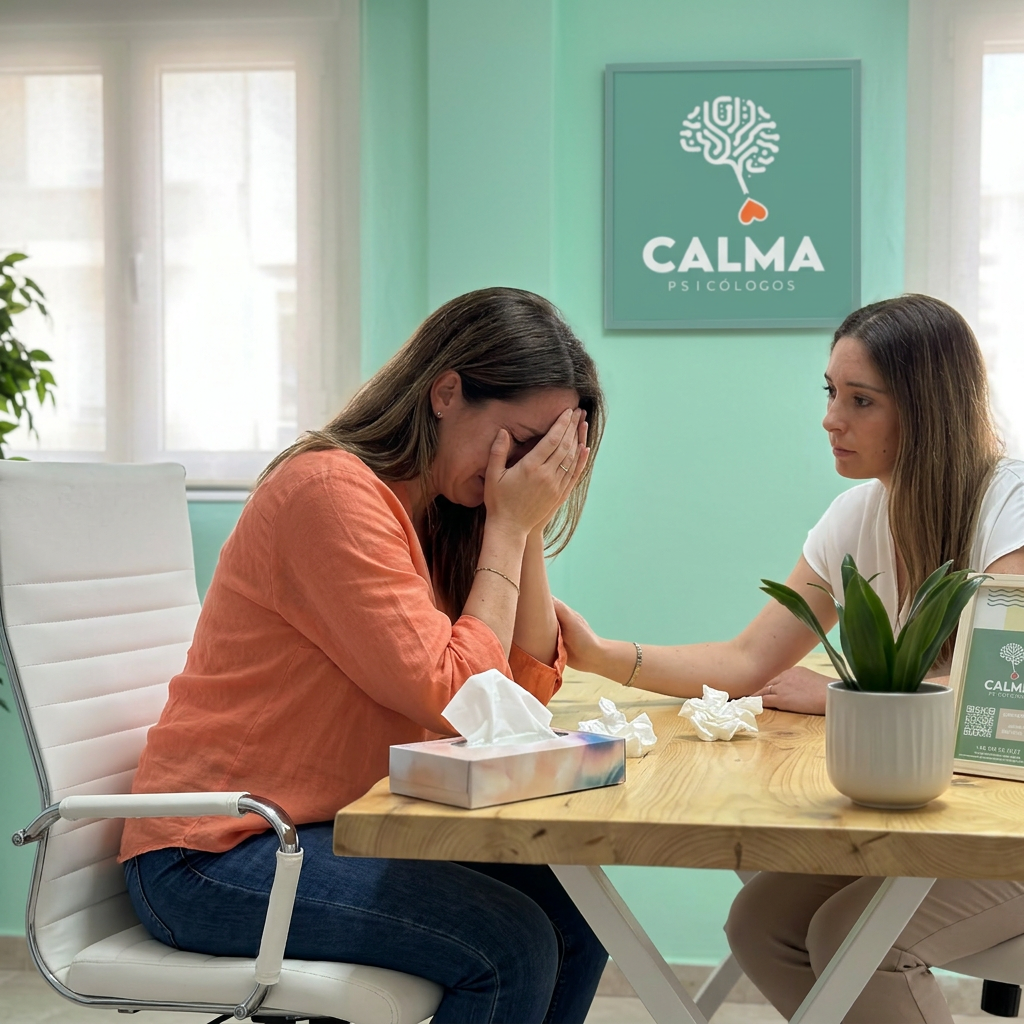
Psychological treatment for major depression
The good news is that depression can be treated effectively.
At CALMA Psicólogos, we work from a personalised approach, adapted to each individual's needs.
Psychological assessment
The first step involves understanding each patient's specific situation, identifying the factors maintaining the problem, and establishing realistic therapeutic goals.
Cognitive behavioural therapy
Cognitive Behavioural Therapy (CBT) is one of the treatments with the greatest scientific evidence for depression.
Allow
- Identify negative thoughts.
- Modify limiting beliefs.
- Get back into healthy habits.
- Improve self-esteem.
- Increase motivation.
Emotional regulation
The therapy also helps to:
- Understanding emotions.
- Lessen self-criticism.
- Develop healthy coping strategies.
- Improve tolerance to emotional distress.
Read more about: emotional regulation or management
Work on personal relationships
Family, social, and romantic relationships are often affected during depression. Therapy helps to improve communication and rebuild meaningful connections.

When to seek psychological help
It is advisable to see a professional when:
- Symptoms last for more than two weeks.
- There is a significant loss of quality of life.
- Difficulties affect work or studies.
- Thoughts of hopelessness appear.
- Social isolation is progressively increasing.
- You are experiencing thoughts of self-harm or suicide.
The sooner treatment is started, the greater the chances of recovery.
Recommended reading When to go to a psychologist

Treatment of major depression in Fuengirola and Mijas
At CALMA Psicólogos, we offer specialised psychological support for individuals experiencing depression, anxiety, and other emotional issues.
Our aim is to help you understand what's happening to you, regain your emotional well-being, and develop tools that allow you to face life's challenges with greater security and confidence.
If you're looking for help with the Major depression in Fuengirola and Mijas, We can support you in this recovery process from a safe, professional, and judgement-free space.
Post written by Samara Valenzuela
If, after reading this entry, you believe you may need therapy and would like to learn more about the professionals who provide it at CALMA PSICOLOGOS, do not hesitate to click.
Bibliographical references
- American Psychiatric Association. (2022). Diagnostic and Statistical Manual of Mental Disorders (DSM-5-TR).
- World Health Organization (WHO). (2023). Depression Fact Sheet.
- Pfizer Spain. (2024). Survey on the perception of mental health and depression in Spain.
- Cuijpers, P., Berking, M., Andersson, G., Quigley, L., Kleiboer, A. & Dobson, K. (2013). A Meta-Analysis of Cognitive Behavioural Therapy for Adult Depression.
- Hirschfeld, R. M. A. (2001). The Comorbidity of Major Depression and Anxiety Disorders.
- Kalin, N. H. (2020). The Critical Relationship Between Anxiety and Depression.
- Kessler, R. C. et al. (2015). The Epidemiology of Major Depressive Disorder.
- Otte, C. et al. (2016). Major Depressive Disorder. Nature Reviews Disease Primers.
- Steffen, A. et al. (2020). Mental and Somatic Comorbidity of Depression.
- Sullivan, P. F., Neale, M. C. & Kendler, K. S. (2000). Genetic Epidemiology of Major Depression: Review and Meta-Analysis.