
Indicators that a relationship is toxic
What is a toxic relationship?
Sometimes, more and more, due to the incipient boasting of pseudo-professional information on social networks, we use this word lightly, but understanding it well is the first step to identify if we are in a harmful couple dynamic.
In addition to this post you may be interested in read our entry on dependent attachment and insecure attachment.
Key signs of a toxic relationship
You constantly feel guilty
Even when you did nothing wrong, you feel that everything that happens is your responsibility.
They control or supervise you too much
Checking your mobile, monitoring who you talk to or where you are is not love: is control
Recommended reading Is it okay to check your partner's phone?
They isolate you from your surroundings
You gradually stop seeing your family or friends because your partner disapproves or creates conflict.
There are insults, scorn or humiliation
Even if they are “jokes”, these comments undermine your self-esteem and affect you deeply.
Emotional blackmail is often involved
“If you leave me, I'll go under”, “with all I've done for you”... these are phrases of manipulation: not of love.
You can't be yourself
You hold back, you are cautious to avoid upsetting your partner, you change the way you are for fear of generating conflict.

Why is it hard to get out of such a relationship?
Toxicity is often mixed with moments of affection that confuse anxious attachment with guilt, manipulation with «love», moments of euphoria with moments of suffering.
Sometimes we think that love is enough, but what is true is that bonds with other people, and especially with the wall, should build, not destroy.
Related reading, discover: The 8 types of couples therapy, based on scientific evidence
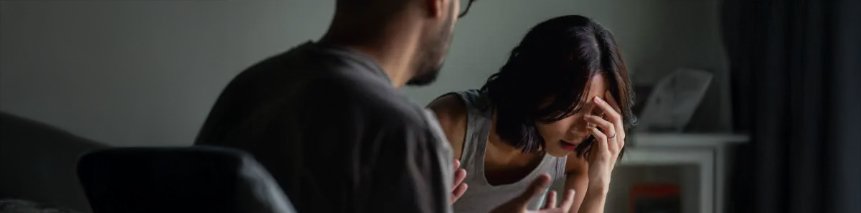
Sometimes it is healthy to intone: Not with you, bug!
How can attending therapy help you in these cases?
In couples (or individual) therapy, you can work:
-
Harmful pattern recognition
-
Your self-esteem, and improve how you feel about yourself.
-
Setting boundaries
-
The accompaniment, if you decide to end the relationship you will have professional support with your therapist, guidelines and regular follow-up.
Therapy is not to judge you, but to help you regain your voice and your wellbeing.
How to move forward
Do you feel identified?
You are not alone
Don't ignore it. Talking it over with a professional may help you more than you realise.
If any of this resonates with you, it is no accident. Listening to you is the first step. In our psychology clinic we offer you a safe space to talk, without judgement.
Post written by Samara Valenzuela
If after reading this post you think you may need help and would like to know more about Samara as a professional, please CLICK and visit her contact profile.