

LGBT couples therapy: what makes a relationship work or fail
LGBT relationships share many aspects with any other affectionate relationship: love, commitment, conflicts, intimacy, and shared living. However, they can also face specific challenges related to the social environment, prejudice, or certain emotional experiences.
At CALMA Psicólogos, we offer LGBT couples therapy in Fuengirola and Mijas with a respectful, approachable, and tailored approach to each couple's needs, helping to improve communication and strengthen emotional bonds.
Psychology is largely neutral and supportive when it comes to LGBTQ+ relationships. Historically, some psychological theories pathologised same-sex relationships, but contemporary psychology, particularly since the mid-20th century, has moved away from this. Here's a breakdown of what psychology generally says: * **No Inherent Pathology:** Mainstream psychology and psychiatry no longer consider homosexuality or bisexuality to be mental illnesses. Key organisations like the American Psychological Association (APA) and the World Health Organisation (WHO) have declassified them as such. * **Relationship Quality is Key:** The factors that contribute to healthy and happy relationships are broadly the same for LGBTQ+ couples as they are for heterosexual couples. These include: * **Effective Communication:** Openly discussing needs, feelings, and concerns. * **Mutual Respect and Support:** Valuing each other's opinions and supporting each other's goals. * **Trust and Intimacy:** Building emotional and physical closeness. * **Conflict Resolution Skills:** Navigating disagreements constructively. * **Shared Values and Goals:** Having a common vision for the future. * **Unique Challenges and Strengths:** While the core elements of a good relationship are universal, LGBTQ+ couples may face unique external stressors and also possess unique strengths. * **External Stressors:** These can include societal stigma, discrimination, lack of legal protections (depending on location), family disapproval, and microaggressions. These can place additional strain on relationships. * **Affinity and Resilience:** Research suggests that LGBTQ+ individuals and couples may develop strong bonds of affinity, mutual understanding, and resilience due to overcoming shared societal challenges. They may be more intentional about relationship building and maintenance. * **Diversity within LGBTQ+ Relationships:** It's crucial to remember that LGBTQ+ relationships are not monolithic. They are diverse, encompassing a wide range of identities, sexual orientations, relationship structures (monogamous, polyamorous, etc.), cultural backgrounds, and individual experiences. Generalisations should be made with caution. * **Therapeutic Approaches:** Therapy for LGBTQ+ individuals and couples often focuses on addressing the impact of minority stress, building coping mechanisms for discrimination, and fostering healthy relationship dynamics, much like therapy for heterosexual couples, but with an awareness of LGBTQ+ specific issues. Affirmative therapy is a common and effective approach. In essence, contemporary psychology views LGBTQ+ relationships as valid, normal, and capable of being just as healthy, fulfilling, and stable as heterosexual relationships. The focus is on the dynamics *within* the relationship and the couple's ability to navigate external challenges, rather than on the sexual orientation or gender identity of the individuals involved.
Research carried out in recent years shows that homosexual couples have similar levels of satisfaction and stability to heterosexual couples.
One of the best-known researchers in this field is John Gottman, an international referência in couple's therapy, who studied the relational dynamics in gay and lesbian couples to understand which factors favour the success or failure of a relationship.
Their research concludes that same-sex couples typically share positive characteristics related to emotional communication and conflict management.
You might be interested in reading: 8 Types of Couples Therapy
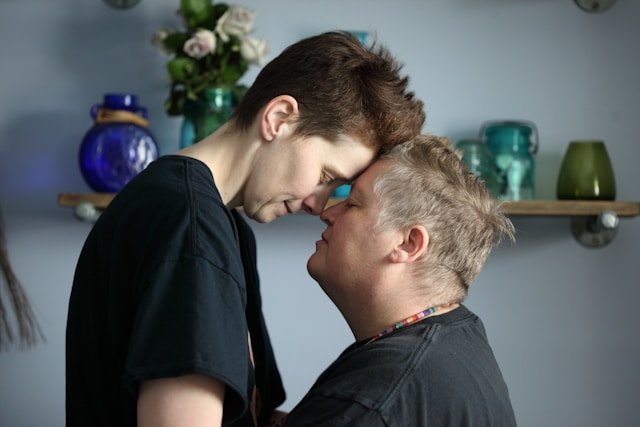
Differences between heterosexual couples and same-sex couples
Although all couples go through difficulties, some research has found certain differences in the way conflicts are approached.
Greater use of affection and humour
Gay and lesbian couples tend to use more expressions of affection, humour and emotional support during arguments.
This helps to reduce tension and makes it easier for conflicts not to damage the relationship so much.
Reduced use of hostile behaviour
Studies also show a lower presence of:
- Dominion
- Belligerence
- Controlling behaviours
- Emotional neglect
In many LGBT relationships, there is a greater sense of equity and balanced power-sharing within the couple.
Greater tolerance for differences
Many same-sex couples learn to live with a certain degree of disagreement without automatically interpreting conflict as a threat to the relationship.
This allows problems to be tackled with less drama and more negotiation capacity.
You might be interested in reading: Do you get drawn into arguments?

Factors that can affect LGBT relationships
Despite these strengths, LGBT couples can also experience specific difficulties arising from the social context.
Recommended reading 12 tips for arguing as a couple.
Social stress and discrimination
Some couples have to face:
- Lack of family support
- Experiences of rejection
- Social prejudice
- Workplace or social discrimination
This accumulated stress can affect emotional well-being and relationship stability.
Difficulties in emotional expression
In some cases, particularly among gay men, there may be a certain difficulty in expressing vulnerable emotions due to cultural and educational models received.
Psychological therapy can help to develop more open and healthy emotional communication.
You might be interested in reading: Turn relationship problems into opportunities.

How does LGBT couples therapy help?
Couples therapy allows for the development of psychological tools to improve the relationship and deal with conflicts in a healthier way.
Recommended reading Cómo saber si la terapia de pareja está funcionando
Improve communication
Many arguments don't arise from the problem itself, but from the way discomfort is communicated.
Therapy helps to:
- Expressing emotions without attacking
- Active listening
- Validate the other person's needs
- Reduce defensiveness
Managing conflict without damaging the bond
Learning to discuss things in a healthy way is one of the main goals in couples therapy.
It's not about avoiding conflict, but about learning to resolve it without damaging the relationship.
Strengthen emotional intimacy
Emotional connection requires constant care. Therapy helps to recover spaces of closeness, trust, and complicity within the couple.
Related article: How to handle your partner asking for some space

Signs that a couple may need psychological help
Some common signs are:
- Constant discussions
- Emotional distance
- Communication problems
- Jealousy or insecurities
- Sexual difficulties
- Feeling of disconnection
- Problems stemming from the family or social environment
Seeking psychological help doesn't mean failure, but a commitment to the relationship's well-being.
Related article: Why do some couples cheat and others don't?

LGBT couple therapy in Fuengirola and Mijas
At CALMA Psicólogos, we offer a safe and non-judgmental space to work through relationship difficulties from an integrative and LGBTIQ+ inclusive perspective.
Any type of success in therapy It has a lot to do with the bond and trust that is generated between therapist and patient.
You might be interested in reading: Therapeutic alliance: what it is
LGBT couples therapy can help you strengthen your bond, improve communication, and approach conflicts with greater mutual understanding.
Recommended reading Communication Challenge for Couples

Post written by Samara Valenzuela
If after reading this entry you believe you may need to attend to assess whether you require COUPLE'S THERAPY and would like to know more about the professionals who provide it at CALMA PSICOLOGOS, do not hesitate to CLICK.