

Managing couple's arguments: 12 key tips for improving your relationship
Disagreements are a part of any romantic relationship. In fact, learning to Managing couple discussions A healthy way can make the difference between a relationship that strengthens over time and one that deteriorates progressively.
Many people interpret conflict as a sign that something is wrong in a relationship. However, differences of opinion, disagreements, and moments of tension are completely normal when two people share projects, responsibilities, emotions and expectations.
The real problem isn't arguing, but how you argue.
At CALMA Psychologists, We help couples in Fuengirola to develop emotional communication tools that allow them to resolve conflicts without damaging their emotional bond.
You might be interested in reading: When to go to couples therapy
Disagreements are a normal part of any relationship because no two people are exactly alike. Everyone has their own unique perspectives, experiences, and ways of seeing the world. When two people come together, these differences are bound to surface, leading to occasions where they don't see eye to eye. Think of it this way: * **Different Needs and Desires:** We all have individual needs and wants. Sometimes, these might clash with our partner's, and that's perfectly natural. For example, one person might need more alone time, while the other thrives on constant companionship. * **Varied Communication Styles:** How we communicate can also lead to misunderstandings. Some people are direct, while others are more indirect. Different upbringings and personalities shape how we express ourselves, and it can take effort to understand each other's communication patterns. * **External Stressors:** Life throws curveballs. Stress from work, family, finances, or health issues can put a strain on a relationship, making people more irritable or sensitive and thus more likely to disagree. * **Personal Growth and Change:** Both individuals in a relationship grow and evolve over time. As people change, their priorities, perspectives, and even their core beliefs might shift, which can sometimes lead to new areas of disagreement. * **Problem-Solving Opportunities:** In a healthy relationship, disagreements aren't about winning or losing; they're opportunities to understand each other better, negotiate, and find solutions that work for both people. They can actually strengthen a relationship by improving communication and trust. The key isn't to avoid disagreements entirely, which is impossible, but rather to learn how to navigate them constructively. A healthy way to handle disagreements involves: * **Active Listening:** Truly hearing and understanding your partner's perspective, even if you don't agree with it. * **Respectful Communication:** Expressing your own thoughts and feelings without attacking or belittling your partner. * **Compromise:** Being willing to meet in the middle and find solutions that acknowledge both your needs. * **Empathy:** Trying to put yourself in your partner's shoes and understand where they're coming from. So, while arguments might feel uncomfortable, they are a natural and often vital part of building a strong and enduring partnership.
During the early stages of falling in love we tend to focus on similarities and minimise differences. However, as the relationship develops, different needs, habits, expectations, and ways of thinking emerge.
Living together, raising children, domestic responsibilities, financial problems, or work stress can generate tensions that end up causing conflicts.
Discussing doesn't mean the relationship is failing.
In fact, couples who never express disagreements tend to accumulate resentment, frustration, and emotional discomfort which, sooner or later, ends up emerging more intensely.
The key is to learn to Managing couple discussions With respect, listening, and a joint search for solutions.
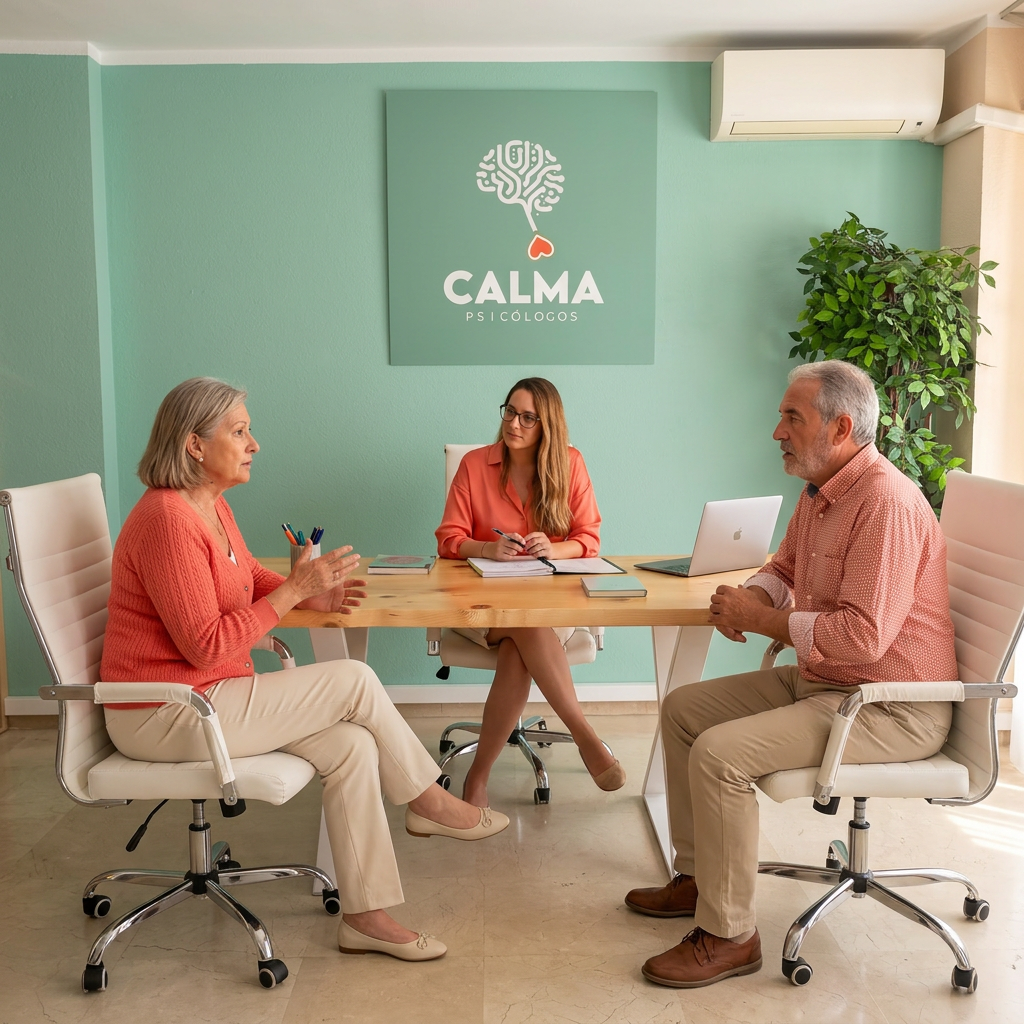
Disagreements are a normal part of any relationship because no two people are exactly alike. Everyone has their own unique perspectives, experiences, and ways of seeing the world. When two people come together, these differences are bound to surface, leading to occasions where they don't see eye to eye. Think of it this way: * **Different Needs and Desires:** We all have individual needs and wants. Sometimes, these might clash with our partner's, and that's perfectly natural. For example, one person might need more alone time, while the other thrives on constant companionship. * **Varied Communication Styles:** How we communicate can also lead to misunderstandings. Some people are direct, while others are more indirect. Different upbringings and personalities shape how we express ourselves, and it can take effort to understand each other's communication patterns. * **External Stressors:** Life throws curveballs. Stress from work, family, finances, or health issues can put a strain on a relationship, making people more irritable or sensitive and thus more likely to disagree. * **Personal Growth and Change:** Both individuals in a relationship grow and evolve over time. As people change, their priorities, perspectives, and even their core beliefs might shift, which can sometimes lead to new areas of disagreement. * **Problem-Solving Opportunities:** In a healthy relationship, disagreements aren't about winning or losing; they're opportunities to understand each other better, negotiate, and find solutions that work for both people. They can actually strengthen a relationship by improving communication and trust. The key isn't to avoid disagreements entirely, which is impossible, but rather to learn how to navigate them constructively. A healthy way to handle disagreements involves: * **Active Listening:** Truly hearing and understanding your partner's perspective, even if you don't agree with it. * **Respectful Communication:** Expressing your own thoughts and feelings without attacking or belittling your partner. * **Compromise:** Being willing to meet in the middle and find solutions that acknowledge both your needs. * **Empathy:** Trying to put yourself in your partner's shoes and understand where they're coming from. So, while arguments might feel uncomfortable, they are a natural and often vital part of building a strong and enduring partnership.
During the early stages of falling in love we tend to focus on similarities and minimise differences. However, as the relationship develops, different needs, habits, expectations, and ways of thinking emerge.
Living together, raising children, domestic responsibilities, financial problems, or work stress can generate tensions that end up causing conflicts.
Discussing doesn't mean the relationship is failing.
In fact, couples who never express disagreements tend to accumulate resentment, frustration, and emotional discomfort which, sooner or later, ends up emerging more intensely.
It is necessary to internalise and express naturally that the perfect couple does not exist, and that you are not always in a good moment as a couple.
The key is to learn to Managing couple discussions With respect, listening, and a joint search for solutions.
Recommended reading Tag team power struggles

Una discusión deja de ser saludable cuando se vuelve hiriente o destructiva. Esto puede ocurrir si las personas empiezan a insultarse, a gritarse, a hacer amenazas, o si se niegan a escuchar o a considerar los puntos de vista de los demás.
A discussion can be considered constructive when:
- There is mutual respect.
- Both people can express themselves.
- The aim is to understand the other person.
- The aim is to solve a problem.
Conversely, an argument becomes detrimental when the following appear:
- Insults or lack of respect.
- Contempt or humiliation.
- Threats.
- Emotional blackmail.
- Punishing silences.
- Verbal or physical aggression.
- Constant accusations.
When these patterns repeat frequently, it is advisable to seek professional help to prevent the conflict from becoming chronic.
The importance of emotional intelligence in couple conflicts
Many discussions don't happen because of the problem itself, but because of how each person interprets what happened and manages their emotions.
Behind an argument, emotions such as can be hidden:
- Fear of rejection.
- Feelings of abandonment.
- Frustration.
- Sadness.
- Insecurity.
- Feeling unappreciated.
Emotional intelligence allows us to identify these emotions and express them appropriately rather than reacting impulsively.
First visit to the psychologist: what to say, what to expect...

12 keys to managing couple's arguments healthily
1. Identify the emotion behind the conflict
Before responding impulsively, ask yourself:
- Am I angry or am I hurt?
- Do I feel ignored?
- Am I scared?
- Am I frustrated?
Understanding the emotion behind a conflict facilitates more sincere and effective communication.
Turn relationship problems into opportunities, thanks to therapy
2. Find the real cause of the problem
Many seemingly small arguments hide deeper emotional needs.
For example:
«You haven't tidied the kitchen» can really mean:
- «I don't feel supported.»
- «I feel like I'm carrying too much of a burden.»
- «We need to value each other's efforts.»
Identifying the root cause of the discomfort helps to resolve the real problem.
3. Don't shy away from difficult conversations
Ignoring conflicts or staying silent to avoid an argument usually makes the situation worse.
Bottled-up emotions end up surfacing later with greater intensity.
Discussing problems early on allows for solutions to be found before they escalate into major conflicts.
4. Speak from the “I” instead of accusing
A very useful strategy is to replace accusatory phrases with "I" statements.
Instead of:
- «You never listen to me.»
Try with:
- «I feel like I'm not being heard when I try to talk to you.»
This small change reduces defensiveness and encourages dialogue.

5. Always maintain respect
Respect should be maintained even in moments of greatest tension.
Words spoken during an argument can leave emotional wounds that are difficult to repair.
Avoid
- Insults.
- Disqualifications.
- Jokes.
- Mockery.
- Harmful comparisons.
The goal should be to resolve the problem, not win the argument.
6. Pick the right moment
Not all situations are appropriate for addressing conflict.
It is advisable to avoid important conversations when:
- There is extreme tiredness.
- One of the two of us is very angry.
- There's a rush.
- There are constant interruptions.
Seeking a quiet moment promotes more effective communication.
7. Avoid making important decisions when angry.
Intense emotions can negatively influence our decisions.
When we are very upset, it is common to say things we don't really feel or make hasty decisions.
It's a good idea to wait until you've calmed down before making any significant decisions about the relationship.
8. Learn to recognise your mistakes
No one is right all the time.
Recognising errors doesn't mean losing an argument, but rather demonstrating emotional maturity.
Apologising when appropriate strengthens the trust and emotional connection within a relationship.

9. Do not bring up past conflicts.
One of the most common mistakes is mixing old problems with the current conflict.
Phrases such as:
- «You always do the same thing.»
- «Do you remember what happened two years ago?»
they make it difficult to resolve the present problem.
It is better to focus on the specific topic being discussed.
10. Use pauses when the tension builds too much
If the discussion becomes too intense, it can be helpful to take a temporary break.
This time allows:
- Calm down.
- Reflect.
- Reduce impulsivity.
- To regain your ability to listen.
The break must be agreed upon and with a commitment to resume the conversation afterwards.
11. Learn to detect when an argument is blocked
Sometimes conversations get into loops where both parties repeat the same arguments without making any progress.
When this happens, it may be necessary:
- Change focus.
- Postpone the conversation.
- Seek professional help.
Persisting in a stalled discussion usually increases frustration.
12. Seek concrete solutions
All discussion should be aimed at some kind of agreement.
At the end of a conversation, it's useful to ask yourself:
- What have we learned?
- What can we do differently?
- What commitment does each person undertake?
Without concrete agreements, conflict is more likely to recur.
You might be interested in our service: Couple therapy

How do you manage arguments in your relationship?
Answer Yes or No to the following questions:
- Can you express disagreements without being disrespectful?
- Do you listen to each other's point of view before responding?
- Do we tend to focus on the current problem without bringing up old conflicts?
- Do we recognise our mistakes when we get them wrong?
- Should we look for solutions rather than culprits?
- Can we discuss difficult topics without avoiding the conversation?
- Do we respect the other person's timings and emotions?
- Do we know when to stop an argument when it becomes too intense?
- Do we feel heard and understood after discussing?
- Do discussions usually end with clear agreements?
Indicative interpretation
8-10 affirmative responses
Your communication presents healthy foundations for resolving conflicts.
5-7 affirmative responses
There are positive aspects, although some communication skills would benefit from improvement.
Fewer than 5 affirmative answers
It's possible that conflicts are significantly impacting the relationship and professional guidance would be advisable.
This test is for informational purposes only and is not a substitute for a professional psychological evaluation.
Recommended reading Hmm?An ante-room to divorce or renewed love?

When to go to couples therapy?
Seeking professional help can be particularly useful when:
- The arguments are constant.
- There are difficulties communicating.
- There's pent-up resentment.
- The same conflicts always repeat themselves.
- Jealousy or distrust appears.
- There has been infidelity.
- There is emotional distance.
- Frequent separations arise.
Couples therapy offers a safe space where both individuals can better understand their needs and learn new ways to relate to each other.
Recommended reading Stop getting caught up in arguments
The role of one-to-one sessions
In many couples therapy processes, it is useful to supplement joint sessions with individual meetings.
These sessions allow for the exploration of personal aspects that may be difficult to discuss in front of one's partner and help to better understand the dynamics influencing the relationship.
Subsequently, this information is integrated into collective work to foster deeper and more lasting changes.

Therapy to manage couple arguments in Fuengirola and Mijas
At CALMA Psychologists we work with couples who wish to improve their communication, resolve conflicts and strengthen their emotional bond.
Through couples therapy, we help identify unhealthy communication patterns, develop emotional skills, and build more balanced and fulfilling relationships.
If you feel that arguments are affecting your relationship, seeking professional help can be the first step towards regaining your connection and shared well-being.
Related article: Can children break up a couple?

Post written by Samara Valenzuela
If, after reading this entry, you believe you may need therapy and would like to learn more about the professionals who provide it at CALMA PSICOLOGOS, do not hesitate to click.
Bibliographical references
- Gottman, J. M. & Silver, N. (2015). The Seven Principles for Making Marriage Work. Crown Publishing.
- Christensen, A., Doss, B. D. & Jacobson, N. S. (2020). Integrative Behavioural Couple Therapy. W. W. Norton & Company.
- Markman, H., Stanley, S. & Blumberg, S. (2010). Fighting for Your Marriage. Jossey-Bass.
- American Psychological Association (APA). Communication and conflict resolution in couple relationships.
- Isabel Rovira Salvador. (2018). 12 tips for better managing couple arguments. Psychology and Mind.