

What is anxiety: how to recognise it and what to do
Understand What is anxiety It is the first step to being able to manage it. It is a natural bodily response to situations perceived as threatening, but when it becomes intense or constant, it can affect emotional well-being and quality of life.
At CALMA Psychological Centre, in Fuengirola and Mijas, we work with you to understand and manage anxiety through an evidence-based approach.
What is anxiety and why does it appear?
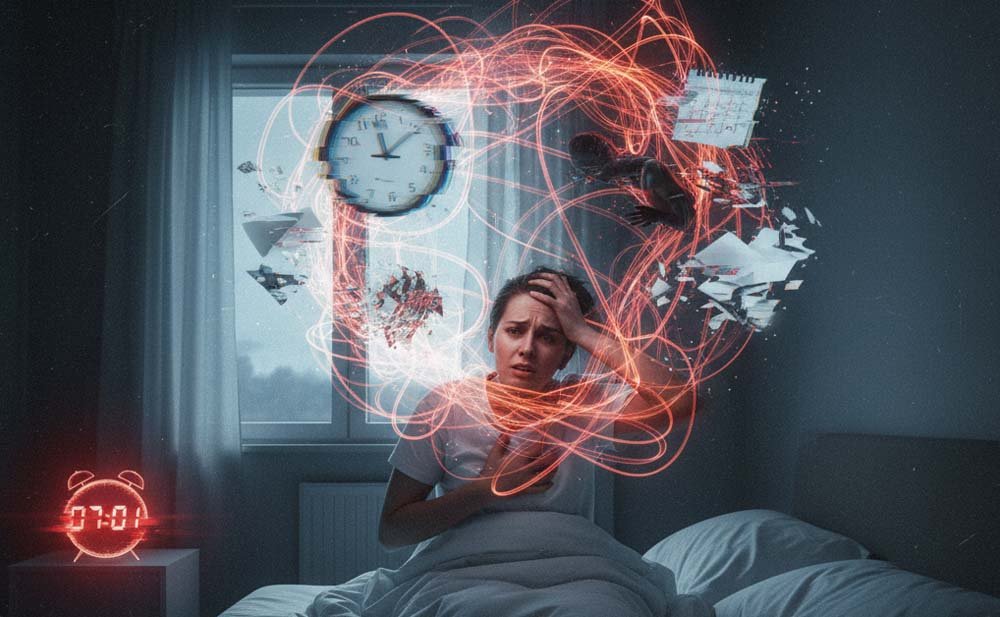
Anxiety is a set of psychological and physiological responses that activate the body in the face of potential dangers. Its function is adaptive: to prepare us to react.
However, when this activation is maintained over time or appears without a real threat, it ceases to be useful and becomes a problem.
According to the Yerkes-Dodson Law, a moderate level of anxiety can improve performance, but an excess of it leads to blockages and discomfort.
Related article:

Symptoms of anxiety
Physical symptoms
- Tachycardia
- Shortness of breath
- Sweating
- Muscle tension
- Mario
Cognitive symptoms
- Negative or catastrophic thoughts
- Fear of losing control
- Constant worry
- Difficulty concentrating
Behavioural symptoms
- Avoiding situations
- Social isolation
- Controlling behaviours

Most common anxiety disorders
When anxiety intensifies, it can lead to various disorders:
- Generalised Anxiety Disorder (GAD)
- Anxiety attack
- Panic attacks
- Agoraphobia
Why does anxiety persist?
Many strategies we use to reduce anxiety (avoiding, controlling, anticipating) work in the short term but maintain the problem in the long term.
Trying to eliminate anxiety often has the opposite effect: more activation and more worry.
Related article:

Psychological treatment of anxiety
Psychological therapy is highly effective at treating anxiety.
At CALMA Psychologists, we work with:
- Cognitive behavioural therapy
- Exposure techniques
- Emotional regulation
- EMDR and integrated approaches
Related article EMDR: myths and realities of the trendy therapy.
The goal is not to eliminate anxiety, but to learn to manage it without fear.
When to go to a psychologist
It is advisable to seek help when:
- Anxiety is frequent or intense
- It interferes with your day-to-day life
- You avoid situations out of fear
- You feel a loss of control

Post written by Samara Valenzuela
If after reading this entry you believe you may need to attend to assess whether you require therapy to learn to manage anxiety and would like to know more about the professionals who provide it at CALMA PSICOLOGOS, do not hesitate to CLICK.
Bibliographic references
- Gottschalk, M.G.; Domschke, K. (2017). Genetics of generalized anxiety disorder and related traits. Dialogues in Clinical Neuroscience. 19(2), :159 – 168.
- Hofmann, S.G.; Dibartolo, P.M. (2010). Introduction: Toward an Understanding of Social Anxiety Disorder. Social Anxiety. pp. XIX – XXVI.
- Kendler, K.S. (2004). Major Depression and Generalised Anxiety Disorder. FOCUS. 2(3): pp. 416 – 425.
- Otte, C. (2011). Cognitive behavioural therapy in anxiety disorders: current state of the evidence. Dialogues in Clinical Neuroscience. 13 (4): 413 – 421.
- Phillips, A.C.; Carroll, D.; Der, G. (2015). Negative life events and symptoms of depression and anxiety: stress causation and/or stress generation. Anxiety, Stress, and Coping. 28 (4): pp. 357 – 371.
- Rynn, M.A.; Brawman-Mintzer, O. (2004). Generalized anxiety disorder: acute and chronic treatment. CNS Spectrums. 9(10): pp. 716 – 723.
- Sylvers, P.; Lilienfeld, S.O.; LaPrairie, J.L. (2011). Differences between trait fear and trait anxiety: implications for psychopathology. Clinical Psychology Review. 31(1): pp. 122 – 137.
- Waszczuk, M.A.; Zavos, H.M.S.; Gregory, A.M.; Eley, T.C. (2014). The Phenotypic and Genetic Structure of Depression and Anxiety Disorder Symptoms in Childhood, Adolescence, and Young Adulthood. JAMA Psychiatry. 71(8): pp. 905 – 916.
- Avance Psicólogos. (2018, November 27). What is anxiety: how to recognise it and what to do. Psychology and Mind Portal. https://psicologiaymente.com/clinica/que-es-ansiedad