
What is the PAI Model and why is it fundamental in EMDR?
The PAI Model (Adaptive Information Processing) constitutes the theoretical core on which the therapy is based. EMDR (Eye Movement Desensitisation and Reprocessing). Developed by psychologist Francine Shapiro In the late 1980s, this model explains how the human brain processes, stores, and integrates life experiences, and why certain traumatic events become «locked» in our nervous system.
The PAI is not a therapeutic technique in itself, but rather a Conceptual framework which describes the natural functioning of the brain to process information. Thanks to the application of EMDR, therapists can stimulate and reactivate this system when it has been disrupted by adverse experiences.
«The average number of neurons in the brain is 100 billion. The number of synapses in a ‘typical’ neuron is 1,000 to 10,000. The Information Processing System (IPS) is built-in and is the result of millions of years of evolution. Stored memories have millions and millions of connections.» — Isabel Fernández, President of the EMDR Europe Association
Origin and development of the PAI Model in the history of EMDR
You might be interested in reading: What is EMDR (Post 1)
Francine Shapiro's Discovery
The story of the PAI Model begins in 1987, When Francine Shapiro, a researcher at Stanford University, made a serendipitous discovery that would revolutionise trauma psychotherapy. During a walk in a park, Shapiro observed that the rapid eye movements she made while thinking about disturbing memories noticeably reduced the negative emotional burden associated with them.
This finding led her to develop a hypothesis: the brain possesses a intrinsic processing mechanism which, under certain conditions, can adaptively integrate disturbing experiences. After years of systematic research, Shapiro formalised the PAI Model as the explanatory basis for EMDR.
Recommended Reading History of EMDR
Scientific evolution of the IPA
Since its initial formulation, the PAI Model has undergone rigorous empirical validation:
| Year | Scientific fact |
|---|---|
| 1989 | First pilot study published by Shapiro on EMDR |
| 1995 | Initial recognition by the American Psychological Association (APA) |
| 2004 | The WHO recommends EMDR as a treatment for PTSD |
| 2013 | The APA includes EMDR in its clinical practice guidelines |
| 2018 | Inclusion in the Clinical Practice Guidelines of the Spanish Ministry of Health |
How does the PAI system work? The neurobiology of adaptive processing
The brain as a network of neural learning
The PAI system develops throughout the individual's entire life. From birth to old age, every lived experience is recorded in memory networks which the brain can later access. These networks are not simple data files but complex structures that make up what we call Neural learnings.
neural network operates like a Interconnected information node What does it contain:
-
Mental imagesVisual representations of the experience
-
Thoughts and beliefsCognitions associated with the event
-
Emotionsaffective responses linked
-
Bodily sensationsphysical manifestations of remembrance
Everything is connected. The human brain does not store information in isolation, but rather creates neural maps where each element is related to others, forming an integral network of meaning.
Synapses: the foundation of information processing
The complexity of the AI system lies in the extraordinary connectivity of the human brain. As Isabel Fernández points out, each typical neuron establishes between 1,000 and 10,000 synapses, which generates a practically infinite network of connections. This system, a product of millions of years of evolution, allows the brain to:
-
Process stimuli from the environment continuously
-
Integrate new information with previous experience
-
Generate adaptive responses unforeseen situations
-
Store learnings for future reference
Recommended reading Debunking myths
Qué ocurre cuando el PAI falla? El trauma como información no procesada
The impact the brain cannot digest
The PAI system functions optimally under normal conditions. However, when a person experiences a high emotional impact event —whether it's an accident, an assault, abuse, a natural disaster, or any situation that overwhelms their coping resources—adaptive information processing is affected altered or blocked.
In these cases, the brain cannot «digest» the experience in the usual way. Traumatic information remains isolated of the pre-existing adaptive memory networks, creating what is termed in EMDR as a «Unprocessed memory» o «dysfunctional neural network».
-
Consequences of the EBA blockage
When the information processing system is interrupted, the person experiences a series of difficulties that affect multiple dimensions of their functioning:
| Affected area | Clinical manifestations |
|---|---|
| Functional capacity | Difficulty concentrating, making decisions, performing at work or in studies |
| Personal resources | Feeling of exhaustion, lack of energy, lack of motivation |
| Social skills | Isolation, interpersonal conflicts, difficulty trusting |
| Mood | Anxiety, sadness, irritability, emotional blunting |
| Physical wellbeing | Chronic pain, muscle tension, sleep disturbances |
| Specific symptoms | Flashbacks, nightmares, hypervigilance, avoidance |
Traumatic information remains «frozen» in time, while conserving the original emotional intensity, bodily sensations, and negative beliefs, as if the danger were still present.
The role of EMDR in the reactivation of IAP
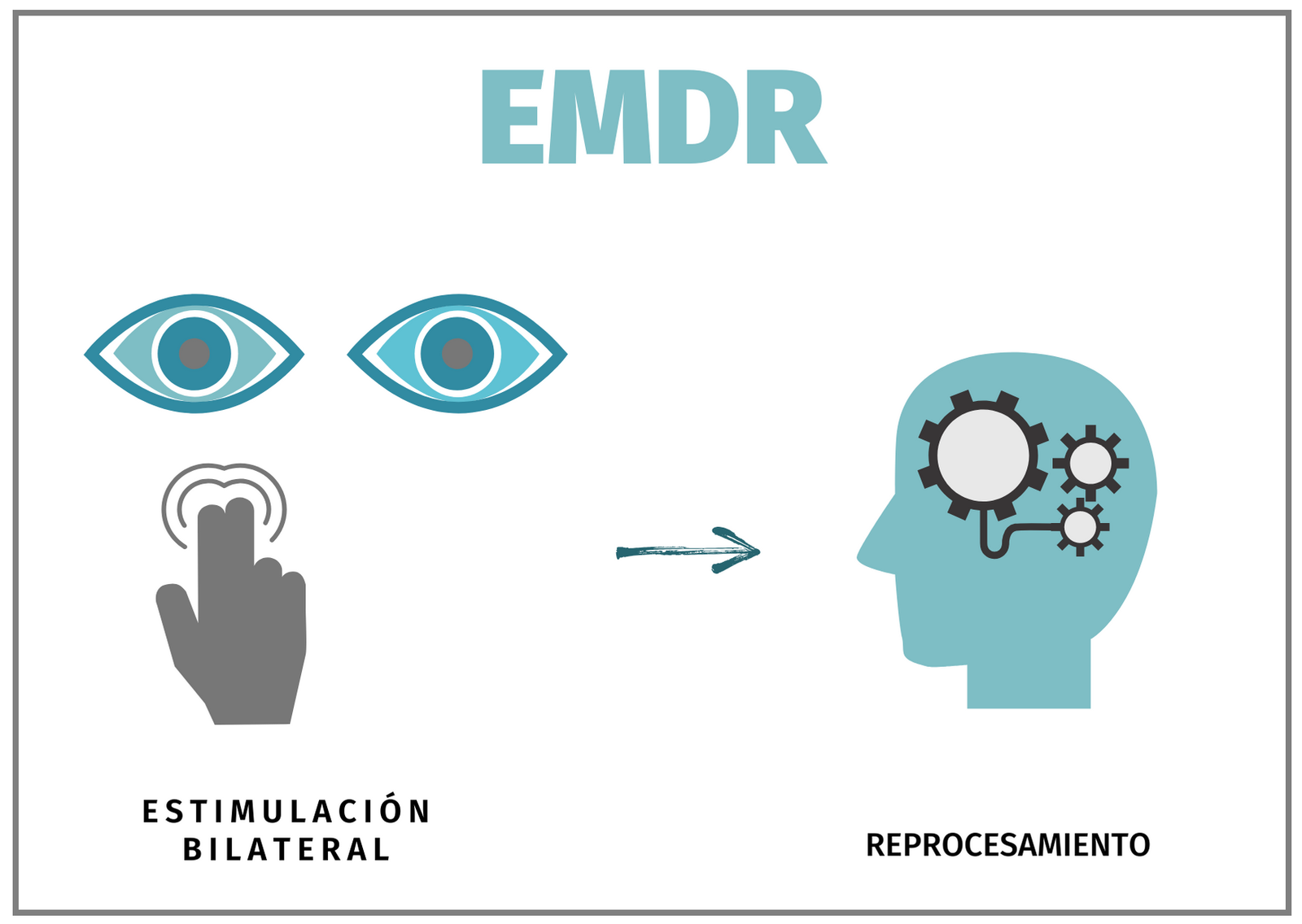
EMDR stimulates the adaptive processing system by using bilateral stimulation, such as eye movements, taps, or tones, to help the brain reprocess traumatic memories. This process, known as bilateral stimulation, is thought to activate both hemispheres of the brain, facilitating the integration and resolution of distressing experiences.
EMDR does not add anything artificial to the brain. On the contrary, reactivate the PAI system which they already possess naturally but which was interrupted during the traumatic event. Through bilateral stimulation—whether through eye movements, tactile stimuli, or alternating auditory cues—EMDR:
- Make access easier the dysfunctional neural network where traumatic memory is stored
- Promotes connection between disturbing information and pre-existing adaptive networks
- Allow reprocessing from experience, integrating it in a healthy way
- Update beliefs negatives associated with trauma from more adaptive perspectives
The result of reprocessing
Once EMDR has successfully stimulated the AIP, the memory of the adverse event no longer retains its negative emotional charge. The person can recall what happened without reliving the original discomfort. The information is integrated into the memory system in an adaptive way, allowing:
-
The symptoms of trauma subside or disappear
-
The person recovers their resources and capabilities
-
Emotional and physical well-being is restored
-
New adaptive learnings to be generated for the future

Scientific evidence for the PAI Model and EMDR
Neuroimaging studies
Research using functional neuroimaging (fMRI and PET) have provided neurobiological evidence for the PAI Model. Recent studies demonstrate that EMDR produces measurable changes in brain activation:
-
Decreased amygdala activity (centre of fear and alarm)
-
Increased activation in the prefrontal cortex emotional regulation
-
Normalisation of connectivity among relevant neural networks
Meta-analyses and systematic reviews
Multiple meta-analyses have confirmed the efficacy of EMDR based on the PAI Model:
| Author(s) | Year | Key finding |
|---|---|---|
| Bisson et al. | 2007 | EMDR effective for PTSD in adults |
| Bradley et al. | 2005 | EMDR shows comparable results to exposure therapy |
| Cuijpers et al. | 2016 | EMDR effective for PTSD with sustained effects over time |
| Ho & Lee | 2017 | Altered brain activity post-EMDR in PTSD patients |
Clinical Applications of the PAI Model in EMDR
Disorders treatable by the IAP approach
The PAI Model is not limited to the treatment of Post-Traumatic Stress Disorder (PTSD). Its application has extended to multiple conditions where unprocessed information plays a central role:
-
Anxiety disorders (phobias, panic disorder, generalised anxiety)
-
Mood disorders Major depressive disorder, dysthymia
-
Dissociative disorders
-
Eating disorders
-
Difficult duel
-
Chronic pain of psychogenic origin
-
Addictions and compulsive behaviours
-
Personality disorders (especially limit)
The PAI in special populations
The PAI Model's flexibility allows it to be adapted to different population groups:
-
Children and adolescentsusing techniques adapted to their cognitive development
-
Elderly peopleProcessing accumulated trauma throughout life
-
Victims of gender-based violenceAddressing complex trauma
-
Emergency professionalsPrevention and treatment of work-related PTSD
-
Refugee personsprocessing migratory and war trauma

Differences between the ABA Model and other therapeutic approaches
PAI vs. Cognitive Behavioural Therapy (CBT)
You might be interested in reading: What is CBT
| Aspect | EMDR (Eye Movement Desensitisation and Reprocessing) model | Traditional TCC |
|---|---|---|
| Focus | Information Processing and Neural Networks | Modification of thoughts and behaviours |
| Relationship with trauma | The trauma is «blocked» and must be reprocessed | Trauma generates dysfunctional schemas |
| Main technique | Bilateral stimulation and reprocessing | Exposure, cognitive restructuring |
| Duration | Generally shorter for simple trauma | May require more sessions |
| Between-session task | Minimal or nil | Frequently required |
PAI vs. Psychoanalysis
The PAI Model differs from the psychoanalytic approach in that it doesn't so much seek the unconscious interpretation As the Neurobiological integration from traumatic information. EMDR works directly with memory networks, facilitating the patient's own brain to perform adaptive processing.

Ethical training and application of EMDR based on the API
Requirements for practising EMDR
The correct application of the PAI Model using EMDR requires a Specific and accredited training. In Europe, the EMDR Association Europe sets rigorous training standards that include:
-
Basic Training (Levels 1 and 2)
-
Clinical case supervision
-
Continuing and specialised training
-
Adherence to ethical and deontological codes
The importance of the prior clinical assessment
Before starting EMDR treatment based on the PAI Model, it is essential to carry out a comprehensive clinical assessment allows for:
- Identify dysfunctional memory networks
- To assess the patient's emotional stability
- To determine the suitability of EMDR for the specific case
- Plan treatment on an individualised basis

Ethical training and application of EMDR based on the API
Requirements for practising EMDR
The correct application of the PAI Model using EMDR requires a Specific and accredited training. In Europe, the EMDR Association Europe sets rigorous training standards that include:
-
Basic Training (Levels 1 and 2)
-
Clinical case supervision
-
Continuing and specialised training
-
Adherence to ethical and deontological codes
Recommended reading What is EMDR actually about?
The importance of the prior clinical assessment
Before starting EMDR treatment based on the PAI Model, it is essential to carry out a comprehensive clinical assessment allows for:
- Identify dysfunctional memory networks
- To assess the patient's emotional stability
- To determine the suitability of EMDR for the specific case
- Plan treatment on an individualised basis
Preguntas frecuentes sobre el Modelo PAI y EMDR
Is the PAI Model scientifically proven?
Yes. Although it was initially a theoretical hypothesis by Francine Shapiro, decades of research in neuroimaging, psychophysiology and controlled clinical studies have provided consistent evidence supporting the postulates of EMDR.
-
Do all people have the PAI system?
Yes. The PAI is a universal neurobiological system present in all human beings. What varies is its degree of optimal functioning, which can be affected by genetic factors, early experiences, accumulated trauma, or medical conditions.
-
Is EMDR the only way to activate the PAI?
No. The brain can process information adaptively spontaneously, during REM sleep, with social support, or through other therapies. EMDR is a specific methodology that makes it easier and faster this natural process, especially when it has become blocked.
-
How long does it take for the PAI to reactivate with EMDR?
The time required varies depending on the complexity of the case. For simple traumas, it may take between 3 years and 12 sessions. In cases of complex or dissociative trauma, treatment may extend to Months or years, requiring a prior preparation and stabilisation phase.
Post written by Samara Valenzuela
If, after reading this entry, you think you might need to seek evaluation to see if you require EMDR therapy, and you would like to learn more about the professionals who offer it at CALMA PSICOLOGOS, please do not hesitate to CLICK.
References and Bibliography
Essential books
-
Shapiro, F. (2001). Eye Movement Desensitisation and Reprocessing: Basic Principles, Protocols, and Procedures (2nd ed.). Guilford Press.
-
Shapiro, F. (2018). Eye Movement Desensitisation and Reprocessing (EMDR) Therapy: Basic Principles, Protocols, and Procedures (3rd ed.). Guilford Press.
-
Shapiro, F. (2012). Getting Past Your Past: Take Control of Your Life with Self-Help Techniques from EMDR Therapy. Rodale Books.
-
Solomon, R. M., & Shapiro, F. (2008). EMDR and the adaptive information processing model: Potential mechanisms of change. Journal of EMDR Practice and Research, 2(4), 315-325.
Key scientific articles
-
Bisson, J. I., Ehlers, A., Matthews, R., Pilling, S., Richards, D., & Turner, S. (2007). Psychological treatments for chronic post-traumatic stress disorder: Systematic review and meta-analysis. British Journal of Psychiatry, 190(2), 97-104.
-
Bradley, R., Greene, J., Russ, E., Dutra, L., & Westen, D. (2005). A multidimensional meta-analysis of psychotherapy for PTSD. American Journal of Psychiatry, 162(2), 214-227.
-
Cuijpers, P., Voshaar, R. C. O., & van Oppen, P. (2016). Are psychotherapies for depression equally effective in older adults? A systematic review and meta-analysis. International Psychogeriatrics, 28(6), 881-893.
-
Ho, M. S. K., & Lee, C. W. (2017). Cognitive changes in PTSD patients treated with EMDR: A controlled study. Journal of EMDR Practice and Research, 11(3), 136-143.
-
Pagani, M., Högberg, G., Salmaso, D., Nardo, D., Sundin, O., Jonsson, C., … & Jacobsson, H. (2007). Effects of EMDR psychotherapy on 99mTc-HMPAO distribution in occupation-related post-traumatic stress disorder. Nuclear Medicine Communications, 28(10), 757-765.
-
van den Hout, M. A., & Engelhard, I. M. (2012). How does EMDR work? Journal of Experimental Psychopathology, 3(5), 724-738.
Clinical guidelines and international consensus
-
American Psychiatric Association (APA). (2017). Clinical Practice Guideline for the Treatment of PTSD. American Psychiatric Association Publishing.
-
World Health Organization (WHO). (2013). Guidelines for the Management of Conditions Specifically Related to Stress. WHO Press.
-
National Institute for Health and Care Excellence (NICE). (2018). Post-traumatic stress disorder: Management. NICE Guideline [NG116].
-
Department of Health, Consumer Affairs and Social Welfare. (2018). Clinical Practice Guideline for the Management of Post-Traumatic Stress Disorder. Madrid.
EMDR Europe Association Resources
-
-
Fernández, I. (Ed.). EMDR Europe Training Manuals. EMDR Association Spain.
-
EMDR Association Europe. (2020). Standards for training and practice. Retrieved on: https://www.emdr-europe.org
-
You might be interested in reading: Debunking myths about EMDR
Quick read to expand information on EMDR and/or related topics:
- What is TRAUMA? https://calmapsicologos.com/es/que-es-un-trauma/
- Therapy service EMDR at Calma Psicólogos
- Treatment for the Calm Duel Psychologists