
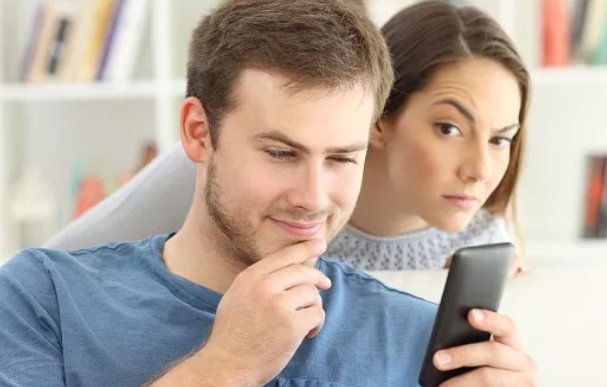
Privacy: Is it OK to look at your partner's mobile phone?
En la era digital, los límites entre intimacy and privacy as a couple se han vuelto más difusos que nunca. Una de las cuestiones más comunes que aparecen en terapia de pareja es: ¿está bien mirar el móvil de mi pareja?
La respuesta no es tan simple como un “sí” o un “no”. Depende del contexto y, sobre todo, de la intención. Para abordarlo con criterio, es fundamental diferenciar dos conceptos que suelen confundirse: privacy y privacy.
Privacy and intimacy: two sides of the same coin
The privacy es ese espacio emocional compartido en el que las personas se muestran con autenticidad, vulnerabilidad y apertura. En una relación sana, implica confianza, comunicación y el deseo de conocerse profundamente.
On the other hand, the privacy es un espacio individual, el derecho de cada persona a mantener una parte de su vida sin necesidad de compartirla, incluso dentro de la pareja. Incluye pensamientos, recuerdos, conversaciones y, por supuesto, el uso del teléfono móvil o las redes sociales.
No existe una “cantidad ideal” de transparencia. Lo importante es que la decisión de compartir información sea volunteer, no exigida ni usada como prueba de amor. En las relaciones más saludables, la elección de qué compartir se basa en la autonomía y el respeto mutuo, not in control.
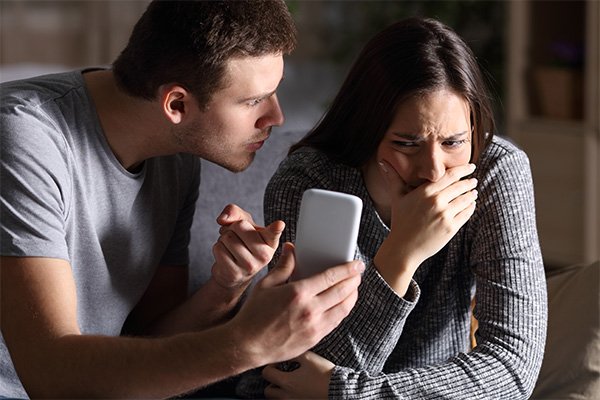
💔 ¿Violar la privacidad por amor?
Mirar el móvil de la pareja “por amor” o “para confirmar la confianza” es una práctica que suele ocultar insecurity or mistrust.
A study published in Cyberpsychology, Behavior, and Social Networking (Muise et al., 2009) reveló que la revisión de mensajes o redes sociales por parte de la pareja se relaciona con más celos, conflictos y menor satisfacción relacional.
Desde la psicología, entendemos que cuando alguien siente la necesidad de comprobar lo que el otro hace a escondidas, se está vulnerando el contrato implícito de trust. Lo dañino no es solo lo que se descubre, sino la forma en que se ha hecho.
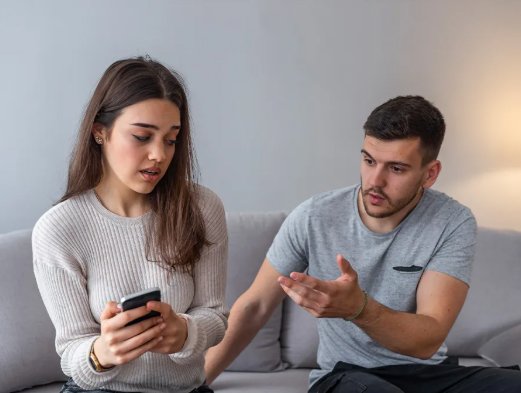
Cómo hablar de límites y redes sociales en pareja
La clave está en speak openly on these issues. Each couple can make their own arrangements, provided that they are consensual and revisable.
Un estudio de Hall y Baym (2012) mostró que las parejas que establecen normas claras sobre el uso de la tecnología experimentan mayor satisfacción y menos conflictos por celos o invasión de privacidad.
Algunas preguntas que pueden ayudar a iniciar la conversación:
-
¿Qué consideramos privado cada uno?
-
¿Para qué queremos tener acceso al móvil del otro?
-
¿Qué nos haría sentir que se ha roto un límite?
-
¿Nos sentimos cómodos compartiendo nuestras claves?
Related reading, discover: The 8 types of couples therapy, based on scientific evidence
Respect as a basis for trust
Mirar el móvil de tu pareja sin su consentimiento no es una prueba de amor, sino una falta de respeto.
Respecting each other's privacy means acknowledging that even within the couple there are personal spaces to be cared for.
Fomentar una relación basada en la confianza, la comunicación honesta y el respeto mutuo fortalece el vínculo sin necesidad de controlar al otro.
The privacy is not distance, is a sign of emotional health and maturity dentro de la relación. La Intimacy is built by sharing, not by invading..
You might be interested in reading: 5 señales de que puede ser buen momento para acudir a TERAPIA DE PAREJA.
References
Hall, J. A., & Baym, N. K. (2012). Calling and texting (too much): Mobile maintenance expectations, (over)dependence, entrapment, and friendship satisfaction. New Media & Society, 14(2), 316–331. | https://doi.org/10.1177/1461444811415047
Muise, A., Christofides, E., & Desmarais, S. (2009). More information than you ever wanted: Does Facebook bring out the green-eyed monster of jealousy? CyberPsychology & Behavior, 12(4), 441–444. | https://doi.org/10.1089/cpb.2008.0263
Post written by Samara Valenzuela Psychologist at CALMA Psicólogos Fuengirola
Post written by Samara Valenzuela
Si tras leer esta entrada crees que puedes necesitar acudir a TERAPIA DE PAREJA y te gustaría conocer más sobre Samara como profesional, no dudes en hacer CLICK y visitar su perfil de contacto.