

The Dunning-Kruger effect: the less we know, the more we think we know
We've all known someone who expresses their opinion with absolute certainty on subjects they barely know. It's also possible that at some point, we ourselves have overestimated our abilities without being fully aware of it. This phenomenon has a name: Dunning-Kruger effect.
Far from being a personality trait, the Dunning-Kruger effect constitutes a cognitive bias widely studied by psychology. It describes the tendency that some people with scarce knowledge or skills in a given area have to value their competence far above reality. Paradoxically, those who possess deep knowledge tend to be more cautious and aware of all that they still do not know.
Understanding this phenomenon can help us improve our self-awareness, make more informed decisions, and develop a more open attitude towards learning.
You may also be interested in reading: Quando acudir ao psicólogo
What is the Dunning-Kruger effect?
The Dunning-Kruger effect was described in 1999 by psychologists David Dunning y Justin Kruger, who observed that people who performed poorly on various tasks tended to significantly overestimate their abilities.
The explanation is straightforward: to recognise our limitations, we need precisely the skills we haven't yet developed. When that knowledge is lacking, our ability to assess our own performance also diminishes.
In other words, the less we know about a subject, the harder it is to spot our own mistakes.
Recommended reading First visit to the psychologist: what to say, what to expect.
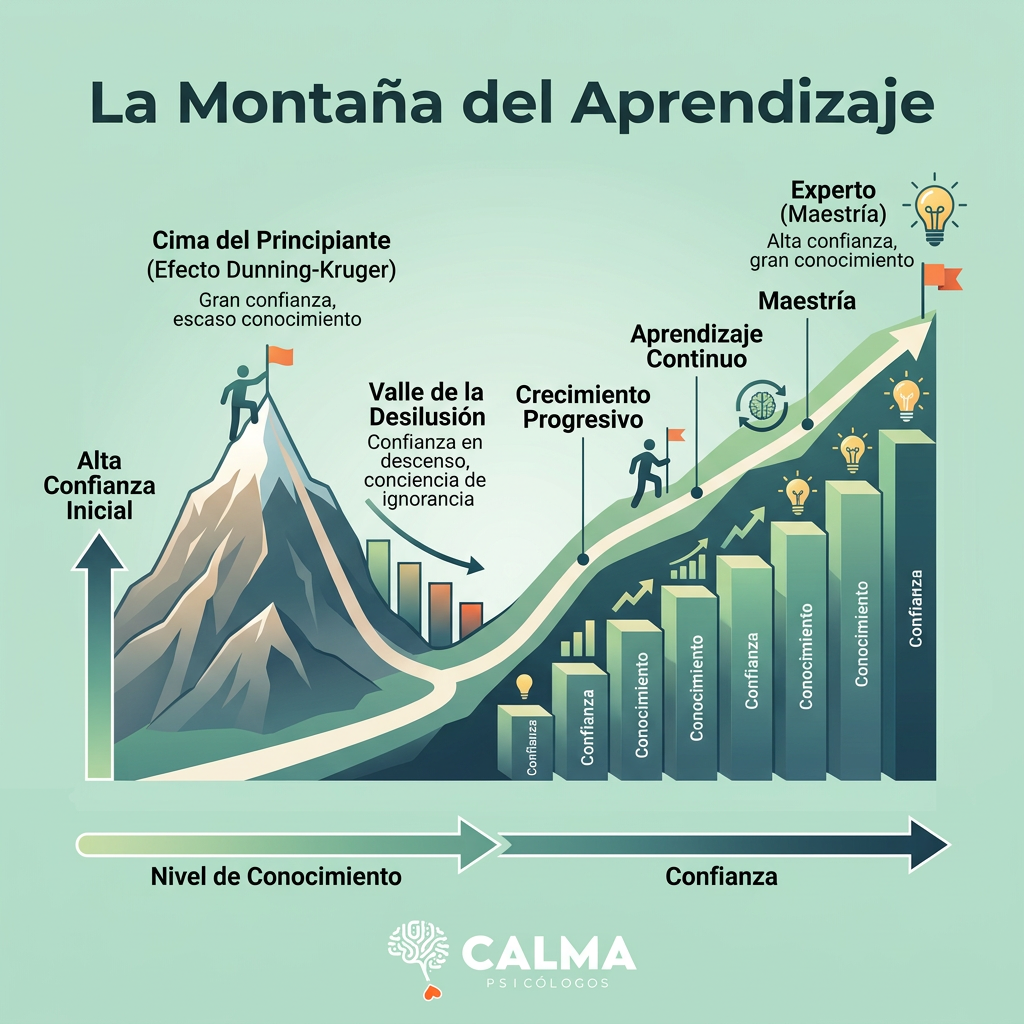
Why does this psychological phenomenon occur?
The Dunning-Kruger effect doesn't appear because people want to deceive others, but because their own evaluation system is limited.
Various research indicates that several psychological processes are involved:
Metacognitive deficit
Metacognition is the ability to think about our own thinking. When this skill is limited, it becomes difficult to objectively assess what we know and what we don't know.
Overconfidence
A superficial familiarity with a topic can lead to a false sense of mastery. This overconfidence favours impulsive decisions and reduces the search for additional information.
Confirmation bias
We tend to pay more attention to information that confirms our beliefs and ignore that which challenges them.
This mechanism maintains the illusion of competence.
Unrealistic comparisons
Another frequent characteristic consists of assuming that one's own abilities are similar to or superior to those of others without objective criteria to verify it.
The Dunning-Kruger effect doesn't appear because people want to deceive others, but because their own evaluation system is limited.
Various research indicates that several psychological processes are involved:
Metacognitive deficit
Metacognition is the ability to think about our own thinking. When this skill is limited, it becomes difficult to objectively assess what we know and what we don't know.
Overconfidence
A superficial familiarity with a topic can lead to a false sense of mastery. This overconfidence favours impulsive decisions and reduces the search for additional information.
Confirmation bias
We tend to pay more attention to information that confirms our beliefs and ignore that which challenges them.
This mechanism maintains the illusion of competence.
Unrealistic comparisons
Another frequent characteristic consists of assuming that one's own abilities are similar to or superior to those of others without objective criteria to verify it.
You might want to read: Emotional management
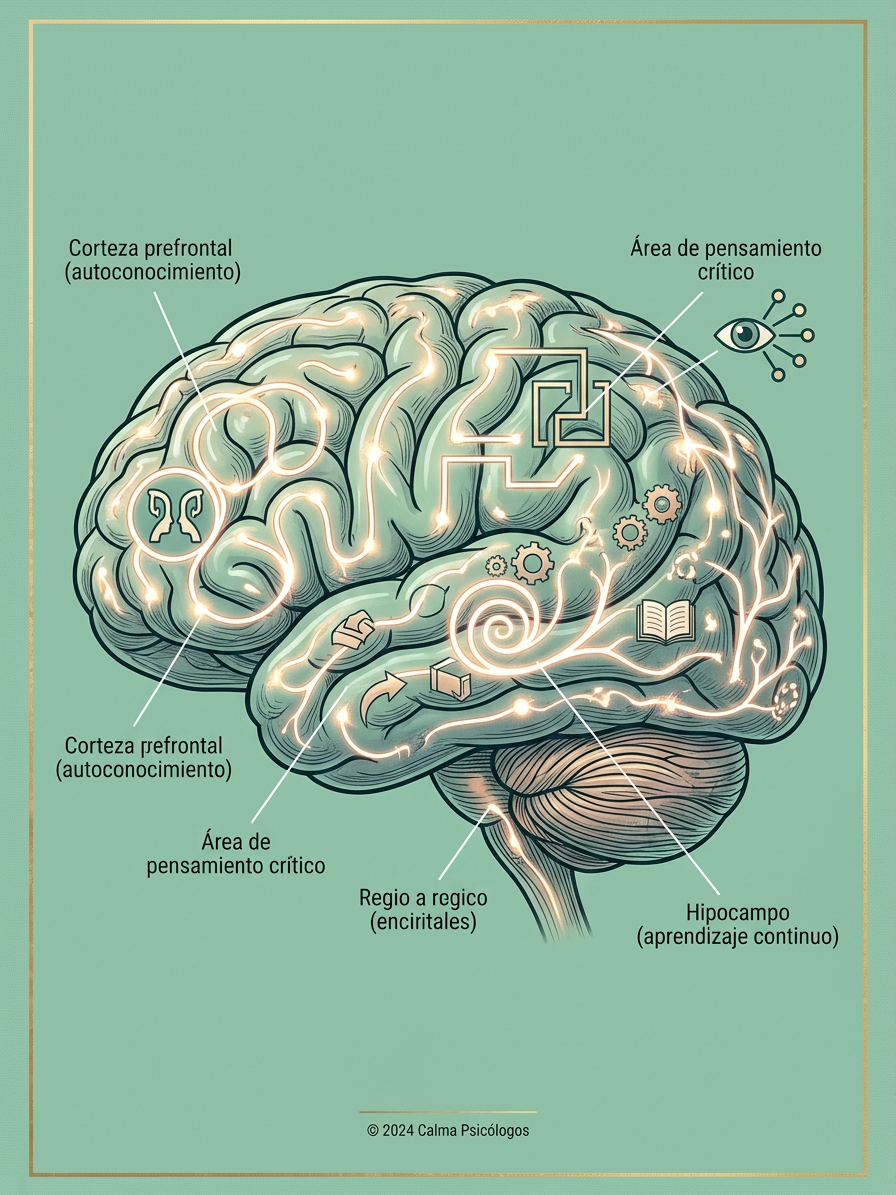
The Dunning-Kruger effect curve
Although popularly represented by a curve, it is worth clarifying that this image is a popular science representation and not an original graph from the study.
Several phases are generally described:
1. Initial trust peak
After acquiring basic knowledge, a strong sense of mastery appears.
The person believes they fully understand the topic.
2. Valley of doubt
As learning increases, new concepts and difficulties appear.
Confidence wanes as the person becomes aware of all that they don't know.
3. Progressive learning
With practice and experience, real competence increases.
Confidence is growing again, but in a much more realistic and measured way.
Discover the professional who will value your case: Samara Valenzuela
Everyday examples of the Dunning-Kruger effect
This bias can appear in practically any sphere.
Some common examples are:
- People who think they've mastered a subject after reading a few articles or watching a few videos online.
- Drivers who consider their driving style to be well above average.
- Employees who refuse training because they believe they know their job perfectly.
- Students convinced they will pass an exam despite having poorly prepared for the subject.
- Social media users who spread misinformation with absolute certainty.
Discover: Self-esteem
What is their relationship with imposter syndrome?
Although often compared, both phenomena are different.
while the Dunning-Kruger effect leads to overestimate one's own abilities, imposter syndrome causes precisely the opposite.
People with impostor syndrome are typically competent, but they interpret their achievements as being down to luck or chance and live in constant fear of being discovered as «fakes».
Instead, those who exhibit the Dunning-Kruger effect experience high confidence precisely because they are unaware of the actual complexity of the subject.
Discover: Dialectical Behavioural Therapy

Can it affect our mental health?
The Dunning-Kruger effect does not constitute a psychological disorder.
However, it can indirectly influence our well-being when it hinders the ability to accept mistakes, ask for help, or learn from experience.
An unrealistic perception of our capabilities can encourage interpersonal conflicts, impulsive decisions, work problems, and even difficulties in romantic relationships.
At the same time, healthy self-esteem requires finding a balance between self-confidence and acknowledging those areas where we can still continue to grow.
Discover: What is emotional intelligence
How to avoid falling into the Dunning-Kruger effect?
Although this cognitive bias is part of the normal functioning of our minds, there are strategies that help reduce its influence and promote a more realistic perception of our capabilities.
Developing critical thinking, accepting uncertainty, and maintaining a continuous learning attitude are some of the fundamental pillars.
Practise intellectual humility
Accepting that nobody can know everything is a strength, not a weakness.
The most experienced people are usually aware of the enormous amount of knowledge they still have to acquire. This attitude fosters personal and professional growth.
2. Request feedback
Asking for the opinions of others can help us detect blind spots that we are unable to identify ourselves.
Objective feedback is particularly useful when it comes from professionals or experienced individuals in the field.
3. Maintain continuous training
Constant learning allows for an understanding of the true complexity of any discipline.
The deeper we go into a subject, the greater our capacity tends to be for recognising our limitations and continuing to develop.
4. Learning from mistakes
Making mistakes.
Instead of interpreting them as personal failures, they can become a source of valuable information for improving our skills.
5. Questioning our own certainties
Before accepting an opinion as valid, it's worth asking yourself:
- What evidence supports this idea?
- Could I be wrong?
- Do any experts think differently?
- Do I have enough information?
This simple exercise promotes a much more flexible attitude and reduces the influence of cognitive biases.
The Dunning-Kruger effect in different fields
This phenomenon can be observed in practically any context of everyday life.
At work
It can influence decision-making, team management or problem-solving.
Overconfidence can lead to taking on responsibilities for which one is not yet sufficiently prepared.
In education
Some students believe they have mastered a subject after superficial preparation, which reduces their motivation to continue studying.
Instead, those with deeper knowledge are usually aware of the complexity of the subject.
On social media
The internet makes it easy for anyone to spread opinions with enormous confidence, regardless of their level of knowledge.
This favours the spread of misinformation and reinforces overconfidence.
In personal relationships
The Dunning-Kruger effect can also affect communication.
People who believe they are always right tend to listen less, accept criticism poorly, and show a lesser willingness to change, which can lead to conflicts in families or relationships.
Does the Dunning-Kruger effect affect self-esteem?
Although both concepts are related, they are not equivalent.
High self-esteem does not necessarily imply overestimating our abilities. Similarly, low self-esteem does not mean being more objective.
The difference lies in the fact that healthy self-esteem is based on a balanced self-appraisal, recognising both strengths and areas for improvement.
Therefore, the development of self-awareness constitutes one of the best protective factors against this cognitive bias.
A practical exercise for reflection
Could you spare a few minutes to answer these questions:
- In which areas of my life do I usually feel completely safe?
- What knowledge truly underpins that security?
- When was the last time you changed your mind after receiving new information?
- Do I often ask for other people's opinions?
- How do I react when someone questions my ideas?
Responding truthfully can help you identify potential areas where the Dunning-Kruger effect might be influencing you without your full awareness.
A psychologist can be helpful in many situations, including when you're experiencing: * **Emotional difficulties:** Such as persistent sadness, anxiety, irritability, anger, or overwhelming stress. * **Relationship problems:** Issues with partners, family members, friends, or colleagues. * **Life transitions and major changes:** Dealing with divorce, job loss, bereavement, illness, or moving. * **Traumatic experiences:** Following a distressing or frightening event. * **Mental health conditions:** Such as depression, anxiety disorders, eating disorders, PTSD, or addiction. * **Personal growth and self-understanding:** A desire to understand yourself better, improve self-esteem, or develop coping mechanisms. * **Difficulties with behaviour:** Such as procrastination, addiction, or self-destructive patterns. * **Concerns about a child or adolescent:** If you are a parent or guardian worried about a young person's behaviour or emotional well-being. In essence, a psychologist can offer support and guidance whenever you're struggling to cope with life's challenges or wish to make positive changes in your life.
The Dunning-Kruger effect does not require psychological treatment in itself.
However, when cognitive rigidity, difficulty accepting criticism, interpersonal conflicts, or poor self-esteem cause distress, psychological therapy can help develop a greater level of self-awareness.
In therapy it is possible to work on aspects such as:
- Emotional regulation.
- Self-esteem.
- Cognitive flexibility.
- Communication skills.
- Critical thinking.
- Accepting one's own mistakes.
- Tolerance of uncertainty.
These skills promote a more balanced self-perception and better adaptation to daily challenges.
Conclusion
The Dunning-Kruger effect reminds us that confidence doesn't always reflect the actual level of competence. Sometimes, the less we know about a subject, the greater our sense of mastery can be; whereas deep knowledge is often accompanied by prudence, curiosity, and an awareness of one's own limitations.
Far from being a cause for concern, understanding this phenomenon can become an excellent opportunity to continue learning, question our own beliefs, and develop stronger self-esteem based on real knowledge rather than overconfidence.
Accepting that we can always learn something new is one of the best tools for personal and professional growth.
The Dunning-Kruger effect does not require psychological treatment in itself.
However, when cognitive rigidity, difficulty accepting criticism, interpersonal conflicts, or poor self-esteem cause distress, psychological therapy can help develop a greater level of self-awareness.
In therapy it is possible to work on aspects such as:
- Emotional regulation.
- Self-esteem.
- Cognitive flexibility.
- Communication skills.
- Critical thinking.
- Accepting one's own mistakes.
- Tolerance of uncertainty.
These skills promote a more balanced self-perception and better adaptation to daily challenges.
At CALMA Psicólogos, we can help you
At CALMA Psychologists We support people who wish to improve their self-esteem, develop greater self-awareness, and learn strategies for managing cognitive biases that can affect their well-being and personal relationships.
If you feel that constant doubts, insecurity or, conversely, difficulty accepting mistakes are interfering with your life, our team of psychologists in Fuengirola and Mijas can help you understand these patterns and develop a more balanced view of yourself.
Post written by Samara Valenzuela
If, after reading this entry, you believe you may need therapy and would like to learn more about the professionals who provide it at CALMA PSICOLOGOS, do not hesitate to click.
Bibliographical references
-
- Dunning, D., & Kruger, J. (1999). Unskilled and unaware of it: How difficulties in recognising one's own incompetence lead to inflated self-assessments. Journal of Personality and Social Psychology, 77(6), 1121-1134.
- Kahneman, D. (2011). Thinking, Fast and Slow. Farrar, Straus and Giroux.
- Miller, T. M., & Geraci, L. (2011). Unskilled but aware: Reinterpreting overconfidence in low-performing students. Journal of Experimental Psychology: Learning, Memory, and Cognition, 37(2), 502-506.
- Kruger, J., & Dunning, D. (2002). The miscalibration of competence. Current Directions in Psychological Science, 11(3), 83-87.
- American Psychological Association. (2023). APA Dictionary of Psychology. https://dictionary.apa.org
- Stanovich, K. E. (2011). Rationality and the Reflective Mind. Oxford University Press.
- Tversky, A., & Kahneman, D. (1974). Judgment under uncertainty: Heuristics and biases. Science, 185(4157), 1124-1131.
- Wilson, T. D., & Dunn, E. W. (2004). Self-knowledge: Its limits, value, and potential for improvement. Annual Review of Psychology, 55, 493-518.