

Do I have stress or anxiety? Let's talk about the differences
Stress:
It is a response to an external demand perceived as challenging or threatening.
Anxiety:
It is an anticipatory response to a future or potential threat.
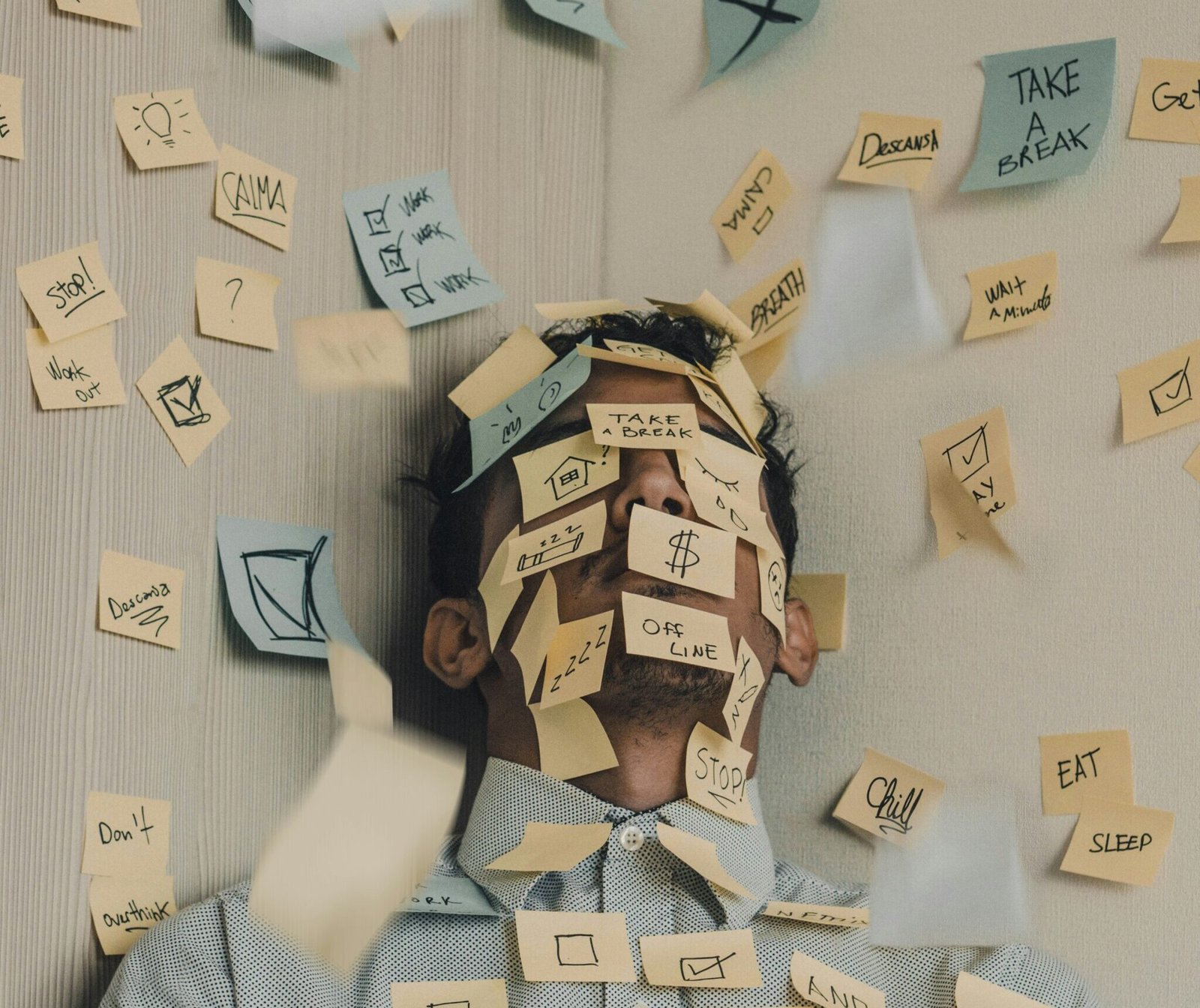
What can we learn from stress to detect it and ask for help?:
- Stress, the origin is clear and external (e.g. an exam, a period of work overload).
- It is in the present or in the short term.
- It ends when the stressor disappears.
- Presents physiological and specific activation (tachycardia, sweating, muscle tension, etc.).
- It can be adaptive or useful, preparing the body to respond to the stimulus.

What can we learn from Anxiety to detect it and ask for help?:
- It may have internal and less well-defined origin (worries, anticipation of something that might happen).
- It focuses on mainly in the future.
- Can persist without stressr evident.
- There are physical symptoms along with other more diffuse and sustained symptoms (gastric discomfort, insomnia, general restlessness).
- It tends to be dysfunctional in that it affects everyday life.
The stress is an adaptive and punctual response, is usually time-limited and occurs in the face of a challenge.

Stress is not something that comes out of nowhere. In fact, it is a natural reaction of our body and mind when we feel that something is beyond us. It can arise from an accumulation of responsibilities, unresolved conflicts or a constant feeling of demand.
It's as if an alarm goes off inside us that says, “Watch out, this is too much!” Sometimes, that alarm is accompanied by:
- physical discomfort,
- headaches,
- muscle tension
- sleeping problems.
At other times it is more emotional:
- irritability,
- Anxiety
- or the feeling of always running without getting anywhere.
Not all stress is bad. In fact, in small doses it can help us stay alert and perform better.
The problem arises when it becomes chronic, when that pressure doesn't stop and we feel like we can't catch our breath. That's when we start to pay a price: both in our bodies and in our relationships and general well-being.
And what can we do? The first thing is to recognise it. Listen to the body's signals, give ourselves permission to stop and ask for help if necessary.
It is not about eliminating all stress (because that is not realistic), but about learning to manage it better: with breaks, with emotional support, and above all, with more kindness towards ourselves.
The anxiety tends to be more persistent in nature, often an anticipatory response, to a potential threat

Anxiety is when the mind gets ahead of itself and the body suffers.
It's like that awkward guest who arrives unannounced and you don't know when he's going to leave. We have all, at one time or another, felt anxiety in different situations in life:
- before an exam,
- when facing a difficult conversation,
- or when something important is about to happen.
In small doses, it is normal. It is our body's way of preparing for what it perceives as a challenge or threat.
The problem is when that feeling doesn't go away. When the mind starts imagining negative scenarios over and over again, as if it wants to anticipate everything that could go wrong.
The heart races, it is difficult to breathe normally, there are knots in the stomach, insomnia or difficulty concentrating. Sometimes we don't even know why we feel this way. It's just there, like a constant shadow.
Anxiety is not weakness or exaggeration. It is a very real, and often involuntary, response. It can be related to lifestyle, past experiences, or simply a biological predisposition. The important thing is to understand that it can be learned to manage it. With breathing techniques, organisation of thought, exercise, rest and, if necessary, psychological support.
You are not alone. Anxiety does not define you, and talking about it - rather than hiding it - is the first step towards letting it stop having so much power over you.
Post written by Samara Valenzuela
If after reading this post you think you may need help and would like to know more about Samara as a professional, please CLICK and visit her contact profile.