
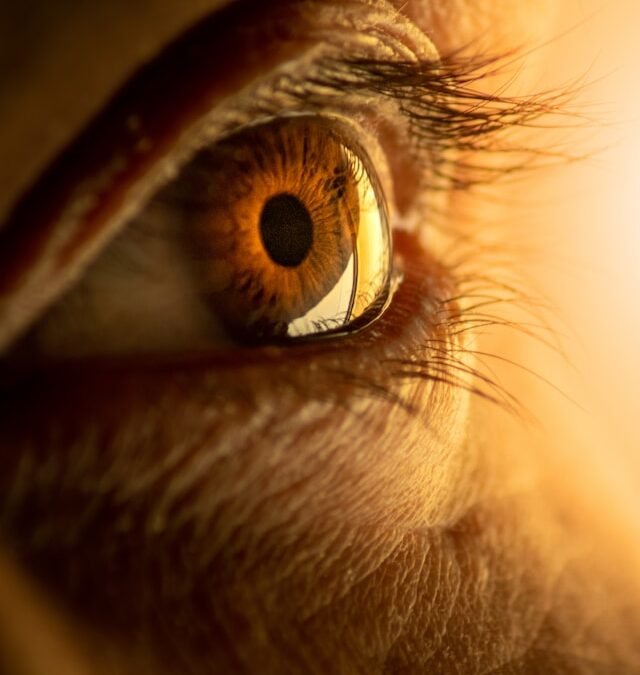
Can pupils express emotions? What psychology says
In recent years, the question of whether pupils can express emotions has generated considerable interest in both research and clinical practice. Understanding the extent to which the body reflects what we feel is key to a better understanding of human behaviour.
Although it has traditionally been said that “The eyes are the mirror of the soul.”, current psychology attempts to go beyond the metaphor and analyse what truth there is in this statement from scientific evidence.
There is a relationship between pupils and emotions.
Pupils don't just react to light. They are also influenced by the autonomic nervous system, which regulates our emotional responses.
This means that, in certain contexts, they can dilate or contract depending on emotional activation. However, this relationship is neither simple nor direct.
Some recent studies suggest that certain emotional states, such as fear or sadness, are associated with greater pupil dilation, while others, such as anger, can cause contraction. Even so, these patterns are not universal or completely predictable.
In conclusion, it appears there is a relationship between our eyes and what we feel and remember. In fact, this principle is part of EMDR, which you can learn more about in this post: EMDR Therapy
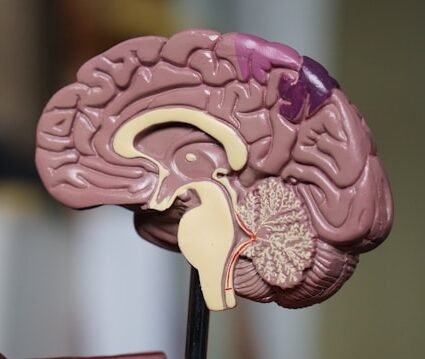
Different ways of understanding emotions
The interpretation of this data depends largely on the theoretical model from which emotions are analysed.
On the one hand, the theory of basic emotions posits that there are specific physiological responses for particular emotions. From this perspective, it would make sense for pupils to reflect differentiated patterns.
On the other hand, more current approaches consider emotions to be complex constructions influenced by context, culture, and personal experience. In this case, pupillary responses would be less specific and more variable.
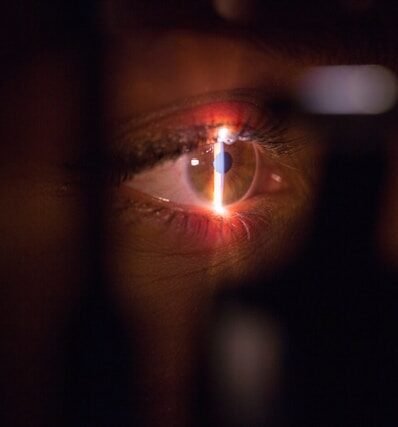
What do scientific studies say
Recent research has analysed how pupils react to controlled emotional stimuli.
In these studies, participants were exposed to images and sounds designed to evoke emotions such as joy, fear, sadness, or disgust, while changes in pupil dilation were recorded.
The results show that:
- There is a certain link between emotion and pupillary response
- Pupils tend to dilate in the face of intense emotions
- It is not always possible to accurately differentiate which specific emotion is being experienced.
This indicates that pupils can reflect emotional activation, but they do not allow for an exact “reading” of emotions.
Can we tell how someone is feeling just by looking at their pupils?
The short answer is no.
Although pupils provide relevant information, they are not sufficient to reliably interpret a person's emotional state. Human emotions are complex processes that depend on multiple variables:
- Personal history
- Social context
- Cognitive interpretation
- Previous values and experiences
To reduce them to a single physiological signal would be an oversimplification.
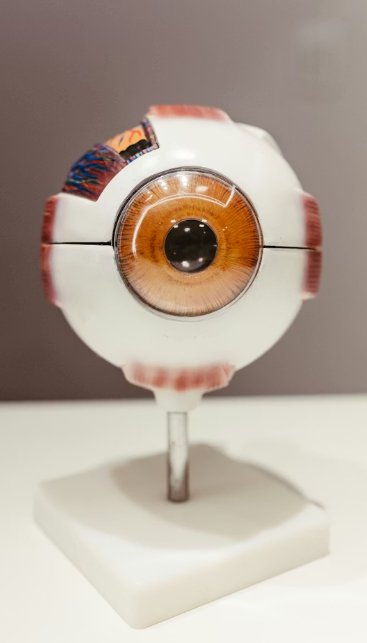
Implications for psychology
This type of finding reinforces a fundamental idea in therapy: it is not enough to observe external behaviour to understand what a person is feeling.
Psychology takes an integrative approach, viewing emotions as the result of the interaction between body, mind and context.
That is why, in a therapeutic process, what matters is not just what is observed, but the meaning the person attaches to their experience.
Conclusion
Pupils may reflect changes linked to emotional arousal, but they do not allow emotions to be identified with precision or universality.
Understanding human emotions requires a broader perspective that takes into account biological, psychological and social processes alike.
Ultimately, human behaviour cannot be explained solely by a physiological response: it needs to be understood within a personal history.
References
- McCulloch, K. et al. (2025). Pupil size differences during emotional experiences. Biological Psychology.
- Ekman, P. (2009). Telling Lies.
- Barrett, L. F. (2017). How Emotions Are Made.