
Emotional Intelligence: What it is, benefits, and how to develop it
It's healthy to ask what emotional intelligence is, as it's a term that, thankfully, is gradually becoming part of everyday life, ceasing to be a word used solely in therapeutic settings.
The Emotional intelligence it is one of the most important psychological skills for facing the challenges of daily life. It allows us to understand our emotions, regulate them appropriately, and relate more healthily to others.
At CALMA Psychologists, we help people from Fuengirola and Mijas to develop their emotional intelligence to improve their psychological well-being, strengthen their personal relationships, and increase their ability to cope with difficult situations.
Recommended reading Emotional management and self-regulation
What is emotional intelligence?
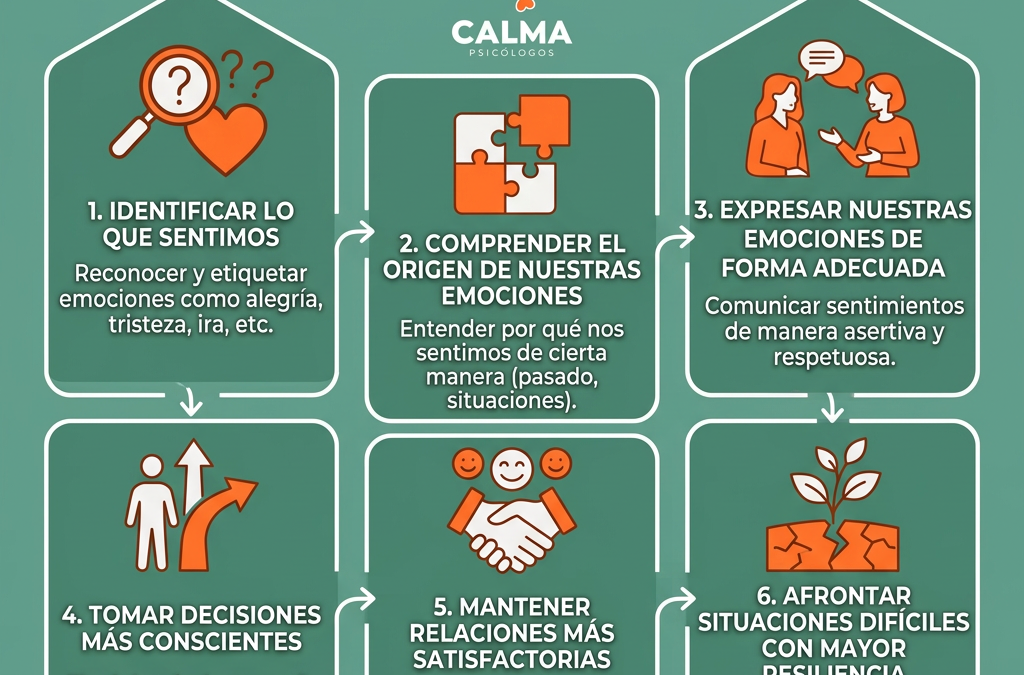
Emotional intelligence is the ability to identify, understand, use, and manage our emotions in an adaptive way.
It's not about avoiding unpleasant emotions, but about learning to recognise them and respond to them in a healthy way.
A person with good emotional intelligence is usually capable of:
- To recognise what one feels.
- To understand why you feel certain emotions.
- Control your emotional reactions.
- Express your feelings appropriately.
- Understanding other people's emotions.
- Resolve conflicts constructively.
Emotional intelligence is a fundamental factor for psychological well-being, life satisfaction, and the quality of personal relationships.
The origin of the concept of emotional intelligence
The concept was initially developed by the psychologists:
- Peter Salovey.
- John D. Mayer.
It was later popularised by the psychologist and science journalist:
Daniel Goleman (as soon as we have time, we'll put together a bio for you)
Thanks to your research, we now know that personal and professional success does not solely depend on IQ, but also on the ability to manage our emotions.
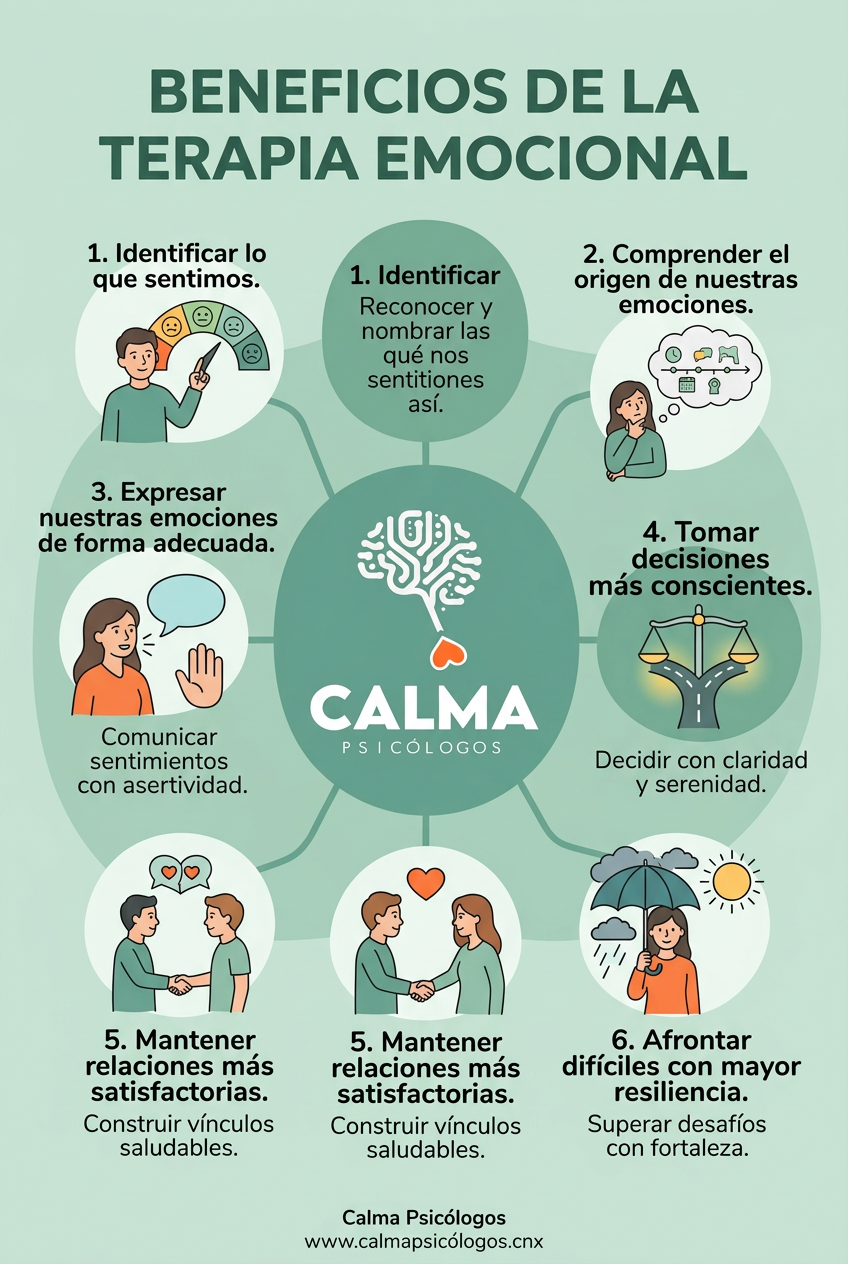
The 5 pillars of emotional intelligence according to Daniel Goleman
Emotional self-awareness
It involves recognising our emotions as they arise.
People with emotional self-awareness are able to identify:
- What do they feel?.
- Why do they feel it?.
- How do those emotions affect their behaviour.
Self-awareness is the foundation of all emotional intelligence.
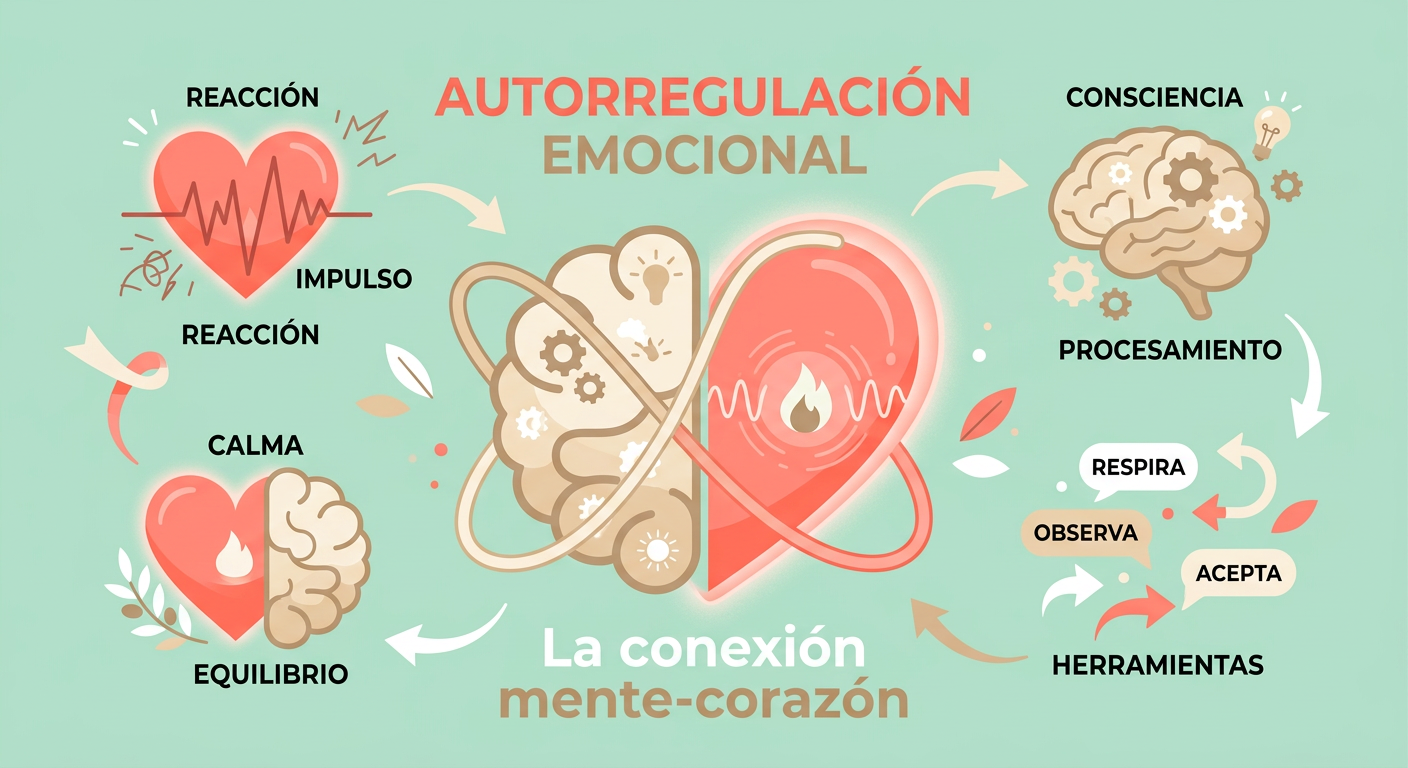
2. Emotional self-regulation
It involves managing our emotions appropriately without letting them control our actions.
Emotional regulation helps to:
- Control impulses.
- Managing anger.
- Reduce anxiety.
- Making more thoughtful decisions.
It doesn't mean repressing emotions, but learning to express them in a healthy way.
3. Motivation
Emotionally intelligent people tend to maintain motivation even when obstacles appear.
Emotional motivation allows for:
- Maintain long-term goals.
- Overcoming frustration.
- Recovering from failures.
- Increase resilience.
4. Empathy
Empathy is the ability to understand the emotions of other people.
Allow
- Improve personal relationships.
- Resolving conflicts.
- Promote communication.
- Strengthening family and couple bonds.
Empathy is an essential skill for healthy coexistence.
5. Social skills
Social skills are the set of abilities that facilitate effective interaction with other people.
They include:
- Assertive communication.
- Active listening.
- Conflict resolution.
- Cooperation.
- Leadership.
- The ability to apologise.
Recommended reading First visit to the psychologist: What to tell, what to expect
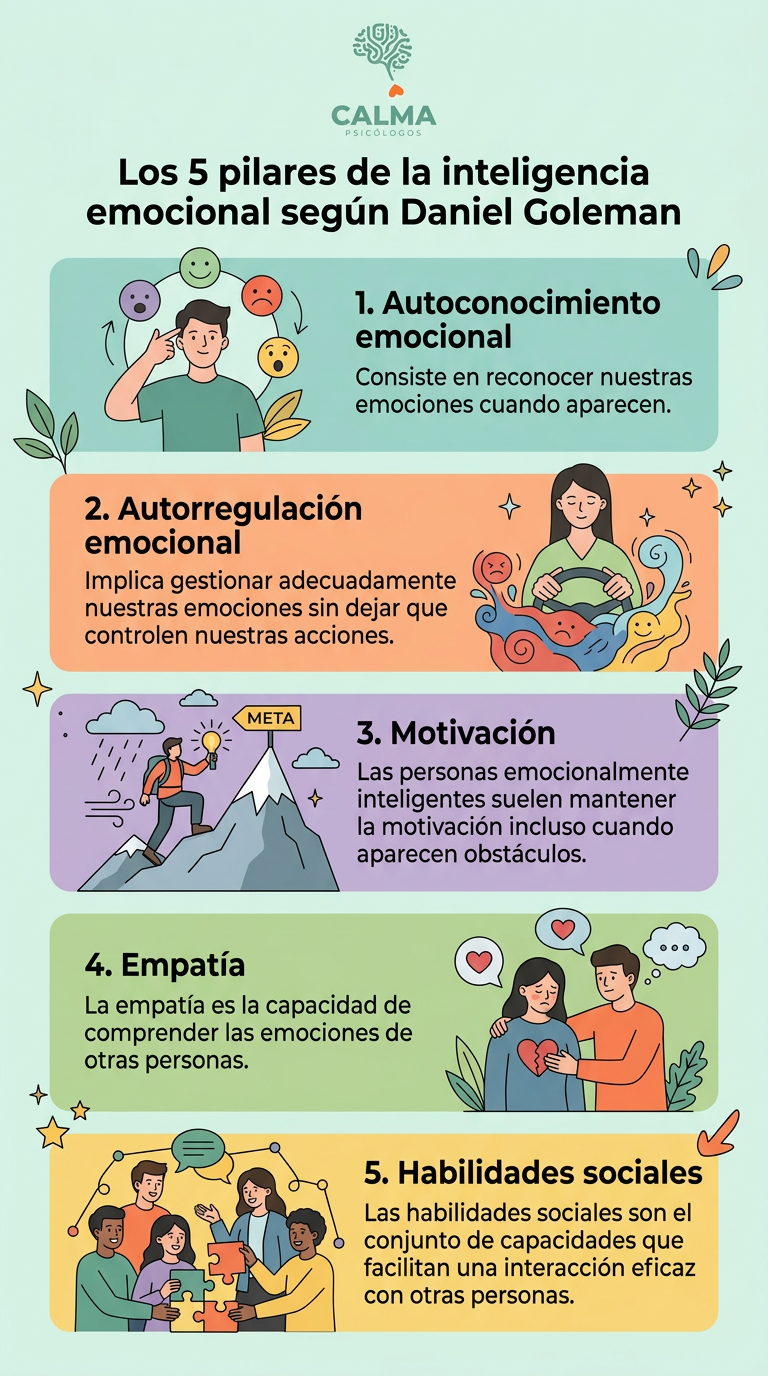
Types of emotional intelligence
Intrapersonal emotional intelligence
It refers to the ability to understand oneself.
Include:
- Self-awareness.
- Self-esteem.
- Emotional regulation.
- Personal motivation.
Interpersonal emotional intelligence
It is related to the ability to understand and relate to other people.
Include:
- Empathy.
- Communication.
- Conflict resolution.
- Social skills.
Curiosities: The importance of the therapeutic alliance
Why is emotional intelligence important?
Many highly educated individuals experience difficulties in their personal or professional relationships due to poor emotional management.
Developing emotional intelligence helps with:
- Reduce stress.
- Improve self-esteem.
- Strengthen relationships.
- Manage conflicts.
- Make better decisions.
- To increase psychological well-being.
- To foster personal growth.
Read about: Self-esteem

The difference between emotional intelligence and intelligence quotient
Intelligence quotient (IQ) primarily measures cognitive abilities such as:
- Memory.
- Logical reasoning.
- Verbal comprehension.
Emotional intelligence assesses:
- Emotional management.
- Empathy.
- Social adaptation.
- Self-control.
- Interpersonal skills.
Both skills are important, but emotional intelligence is usually a deciding factor in quality of life and personal relationships.
How to develop emotional intelligence: 4 tasks to work on
The good news is that emotional intelligence can be trained, and it's relatively easy to improve it in psychological therapy.
Expand emotional vocabulary
Identifying specific emotions makes them easier to understand.
It's not the same to feel:
- Sad.
- Frustrated.
- Disappointed.
- Anxious.
- Annoyed.
The more precise emotional language is, the better emotional management will be.
Practise emotional reflection
Useful questions:
- What am I feeling?
- What has caused this emotion?
- What do I need right now?
- How can I respond in a healthy way?
Improve adaptability
Emotionally intelligent people accept change and develop psychological flexibility.
Emotional adaptation promotes resilience and reduces unnecessary suffering.
Develop emotional independence
Not constantly depending on external approval helps to strengthen self-esteem and personal confidence.
Practical exercises for strengthening emotional intelligence
Emotional diary
Make a note daily:
- What emotions come to the surface.
- What situations trigger them?.
- How we react.
This exercise improves self-awareness.
Emotional mindfulness
Mindfulness helps us to observe our emotions without judging them or reacting impulsively.
Can you reduce:
- Stress.
- Anxiety.
- Rumination.
Recommended reading Mindfulness
Mindful pause
Before responding to an emotionally intense situation:
- Take a deep breath.
- Take a break.
- Think before you act.
This technique significantly improves self-control.
Wheel of emotions
Using visual tools to identify specific emotions helps to improve emotional awareness and emotional regulation.
Emotional intelligence in children and teenagers
Childhood is a crucial stage for developing healthy emotional skills.
Some useful activities are:
- Emotional role-playing games.
- Children’s emotional diary.
- Guided conflict resolution.
- Emotional education in the classroom.
- Identifying emotions using stories or images.
The early development of emotional intelligence promotes:
- Improved self-esteem.
- Less impulsivity.
- Better social relationships.
- Improved academic performance.
Applications of emotional intelligence in everyday life
In personal relationships
It helps:
- Healthy communication.
- Empathy.
- Conflict resolution.
- More fulfilling relationships.
At work
Allow
- Managing work-related stress.
- Adapt to changes.
- Improving leadership.
- To encourage teamwork.
In decision-making
Integrating reason and emotion helps us choose options that are more in line with our values and goals.
Requires training and balance.
How is emotional intelligence assessed?
Psychologists can use different tools to assess emotional intelligence.
These evaluations allow for the analysis of aspects such as:
- Emotional perception.
- Emotional understanding.
- Emotional regulation.
- Social skills.
- Empathy.
Professional assessment can help identify areas for improvement and design specific strategies to strengthen these competencies.
When to see a psychologist to improve emotional intelligence
It may be advisable to seek professional help when:
- It's difficult to manage intense emotions.
- There are frequent problems in relationships.
- Difficulties arise in controlling impulses.
- There are high levels of stress or anxiety.
- Low self-esteem is experienced.
- It's difficult to identify what one feels.
At CALMA Psicólogos, we support individuals from Fuengirola and Mijas in developing their emotional intelligence through evidence-based tools adapted to individual needs.

Improve your emotional intelligence with professional help
Emotional intelligence can be learned and strengthened at any age. Developing these skills fosters a better relationship with yourself, improves your personal connections, and increases your psychological well-being.
If you wish to learn to manage your emotions better, improve your relationships or enhance your personal growth, at CALMA Psicólogos we can help you build the necessary tools to achieve it.

Improve your emotional intelligence with professional help
Emotional intelligence can be learned and strengthened at any age.
Developing these skills fosters a better relationship with yourself, improves your personal connections, and increases your psychological well-being.
With the help of your psychologist, you can learn to manage your emotions better, improve your relationships, or boost your personal growth. We look forward to seeing you at our Fuengirola centre, CALMA Psicólogos, to build your emotional intelligence with the necessary tools.
Post written by Samara Valenzuela
If, after reading this entry, you believe you may need therapy and would like to learn more about the professionals who provide it at CALMA PSICOLOGOS, do not hesitate to click.
Bibliographical references
- Bar-On, R. (2006). The Bar-On Model of Emotional-Social Intelligence (UK English translation).
- Domínguez España, A. et al. (2021). Emotional Intelligence Programmes in Schools and Their Impact on Psychological Adjustment.
- Freedman, J. et al. (2025). Emotional Intelligence and Life Outcomes.
- Goleman, D. (1995). Emotional intelligence. Editorial Kairós.
- Gardner, H. (1983). Frames of Mind: The Theory of Multiple Intelligences.
- MacCann, C. et al. (2019). Emotional Intelligence Predicts Academic Performance. Psychological Bulletin.
- Mayer, J. D., Salovey, P., & Caruso, D. R. (2008). Emotional Intelligence: New Ability or Eclectic Traits?
- Salovey, P., & Mayer, J. D. (1990). Emotional Intelligence. Imagination, Cognition and Personality.
-